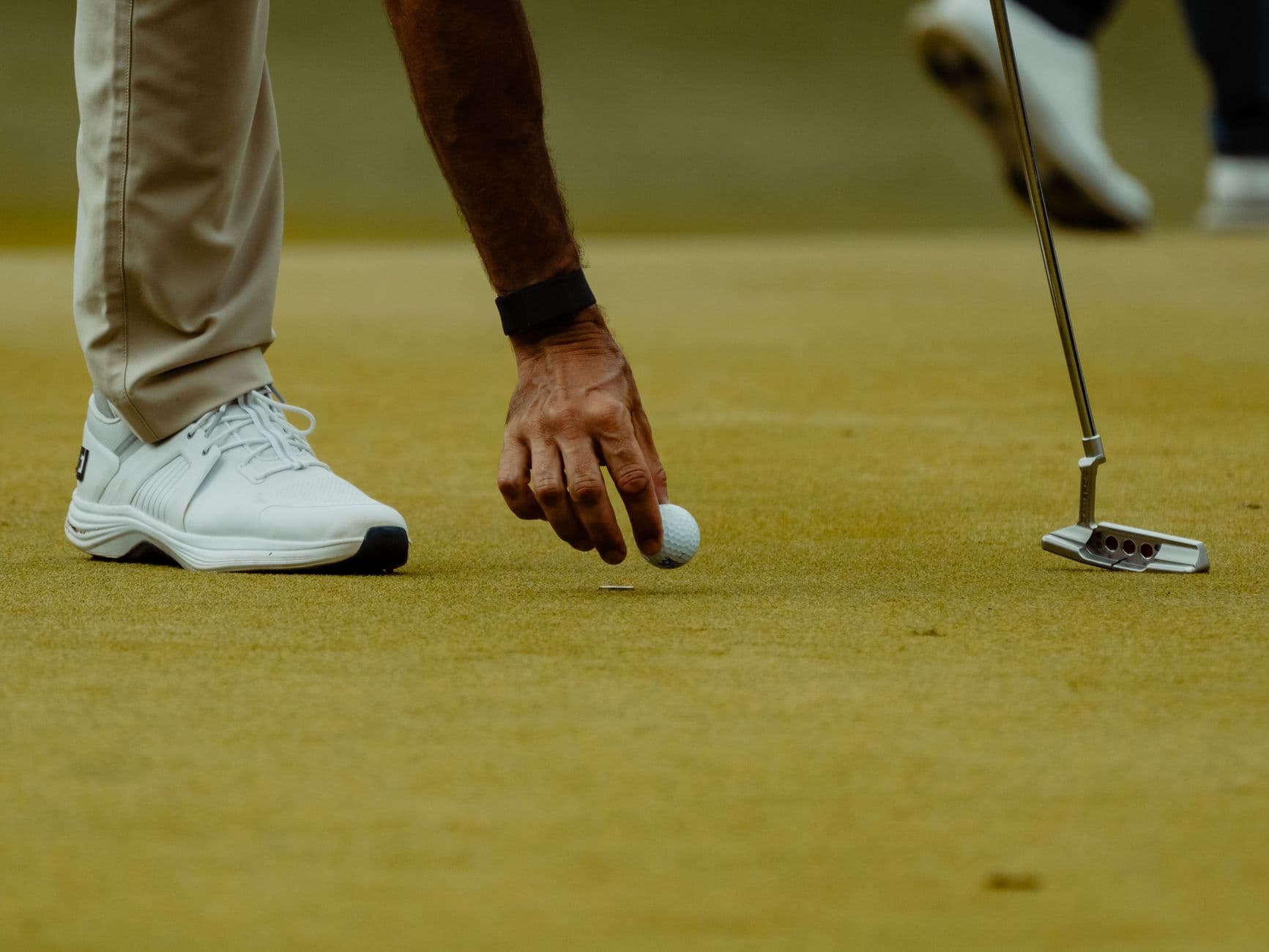
The PGA Tour's summer stretch is historically where seasons are defined — and this week was no exception. With the calendar deep into June 2026, the conversation on Tour has shifted toward who is building momentum and who is running out of time to secure their FedEx Cup position before the postseason push begins.

Week-to-week analysis on Tour isn't just about scorecards. It's about reading which players are peaking at the right time, which course setups are demanding the most from ball-strikers, and how equipment decisions are playing out under competitive pressure.
This week's edition leans into the strategy and patterns emerging across the Tour right now — the kind of insights that separate informed observers from casual scoreboard-watchers.
The Mid-Season Inflection Point
Late June on the PGA Tour represents a genuine inflection point. The Major season is winding down — The Open Championship looms on the horizon — and players are calibrating their games between two very different demands: the precision-first requirements of links golf and the power-distance metrics that dominate Tour setups stateside.
For ball-strikers who rely on a penetrating flight and tight dispersion, this stretch of the season is a proving ground. Fairway width, rough depth, and green firmness all shift the equation significantly. Players who can adapt their launch conditions without overhauling their swing mechanics tend to emerge as the consistent performers.
Course Management Under Pressure
One of the more overlooked narratives on Tour each week is how elite players approach course management decisions at critical junctures — specifically, how they balance aggression off the tee against positional awareness into greens.
Greens in Regulation percentage remains one of the most reliable leading indicators of scoring performance. A player putting up a high GIR number on a demanding layout is controlling the golf course. Conversely, players scrambling for pars week after week rarely sustain leaderboard positions through Sunday.
- Approach shot proximity: elite Tour players regularly attack from inside 150 yards with precision dialed to specific quadrants of the green, not just the pin
- Par-5 efficiency: how a player converts reachable par-5s in two is often the defining variable between a top-10 and a missed cut
- Wind management: even on non-links setups, afternoon winds on exposed Tour venues demand shot-shaping and adjusted launch angles
- Scrambling under par: top-20 finishers typically post scrambling percentages above 60%, a benchmark that reflects short game resilience

Ball Performance in Summer Conditions
Summer Tour setups — firm fairways, faster greens, and elevated temperatures — place unique demands on ball performance. Compression behavior changes measurably in heat, and players who haven't calibrated their ball choice to summer conditions often notice an unwanted uptick in spin off the driver and unpredictable check on approach shots.
This is precisely where the density architecture of a golf ball becomes relevant. Attomax's high-density amorphous metal construction delivers more consistent energy transfer across a wider temperature range compared to traditional ionomer or urethane constructions — meaning the performance profile players dial in on the range holds up in the afternoon heat of a Thursday first round, not just ideal morning conditions.
Whether a player selects the Attomax Soft, Medium, or Hard model depends on their swing speed and desired spin profile — but the underlying metallurgical consistency means fewer surprises when conditions shift between morning and afternoon wave tee times.
The FedEx Cup Race: Pressure and Strategy
As the regular season advances toward August, the FedEx Cup points race tightens the strategic calculus for every player on Tour. For those comfortably inside the top 70, the calculus is about accumulating points without overextending — staying sharp, not peaking too early.
For players on the bubble, however, every tournament carries outsized weight. The decision of where to compete, how aggressively to play, and how to manage physical load across back-to-back events becomes as consequential as the shot decisions on the course.
The best players in the world aren't just great golfers — they're great decision-makers. The ones who last into October are the ones who treat their schedule like a strategic asset.
— PGA Tour Caddie Analysis, Golf Digest
Shaft Dynamics in High-Stakes Environments
There's a reason Tour players obsess over shaft feel during competitive rounds far more than during practice sessions. Under tournament pressure, tempo tightens. Grip pressure increases. And a shaft that doesn't match a player's true under-pressure tempo — not their range tempo — becomes a liability by the back nine of a Sunday.
Attomax shafts are engineered with this performance-under-pressure reality in mind. The flex profiles are calibrated not just to swing speed, but to the specific kickpoint behaviors that preserve consistency when adrenaline and fatigue begin to affect sequencing. For competitive amateurs and club professionals alike, it's the difference between a shaft that performs in ideal conditions and one that delivers when it actually counts.
Looking Ahead: The Open Preparation Window
With The Open Championship approaching, the next several weeks on Tour represent the last meaningful preparation window for players with links ambitions. The adjustment from manicured American Tour setups to the bounce-and-run demands of a links course is one of the most significant equipment and technique recalibrations in professional golf.
Ball flight trajectory, spin rates, and launch angle all need to compress downward for links conditions. Players who practice the bump-and-run and deliberately suppress their ballflight in these final stateside events tend to arrive at The Open better calibrated than those who make the adjustment upon arrival.
The players who consistently contend at The Open are those who can diagnose their own game honestly — knowing when to take spin off the ball, when to trust a lower-lofted approach rather than attacking the flag, and when the wind is telling them something their caddie has already calculated. That level of course intelligence doesn't emerge from talent alone. It's built over seasons of disciplined, analytically rigorous competition.
Final Thoughts
The PGA Tour's summer stretch rewards players who are honest about their games, precise in their equipment choices, and strategically disciplined in how they manage both courses and schedules. Scorecards tell you what happened — but the real story is always in the decision-making behind the numbers.
We'll continue tracking the season's defining narratives as the Tour moves through this crucial stretch. Check back at attomaxpro.com for weekly analysis, equipment insights, and the kind of in-depth coverage that goes beyond the leaderboard.
Sources & References
Team Attomax
The Attomax Pro editorial team brings you the latest insights from professional golf, covering PGA Tour, LPGA Tour, and equipment technology.