There are players who win tournaments, and then there are players who redefine what dominance looks like in professional golf. Scottie Scheffler belongs firmly in the latter category. The Dallas-born Texan has spent the better part of the last several years occupying the top spot in the Official World Golf Ranking, and in that time, he has made it look less like a hot streak and more like a permanent address.
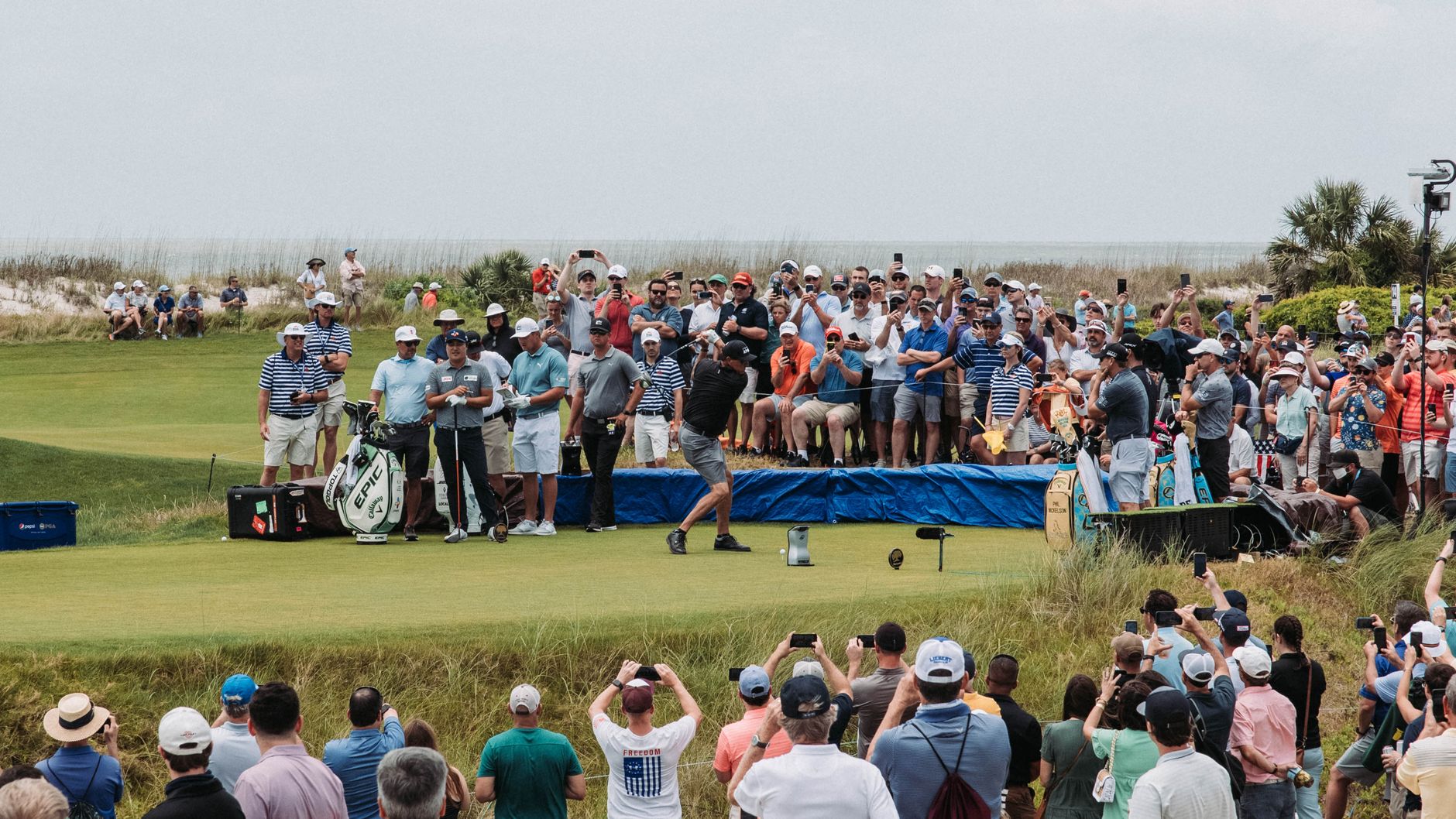
What makes Scheffler genuinely fascinating to dissect is that his game defies the modern era's obsession with singular elite attributes. He is not merely a bomber off the tee, nor purely a precision iron player, nor simply a lights-out putter. He is, by every analytical measure, exceptionally good at nearly everything — and it is that relentless, across-the-board excellence that makes him so difficult to compete against week in and week out.
To understand how he operates at the highest level, you have to look beyond the scorecard and into the architecture of his decision-making. Course management, shot shaping under pressure, and an almost unnerving emotional flatness are the true pillars of his game.
Ball-Striking: The Foundation of Everything
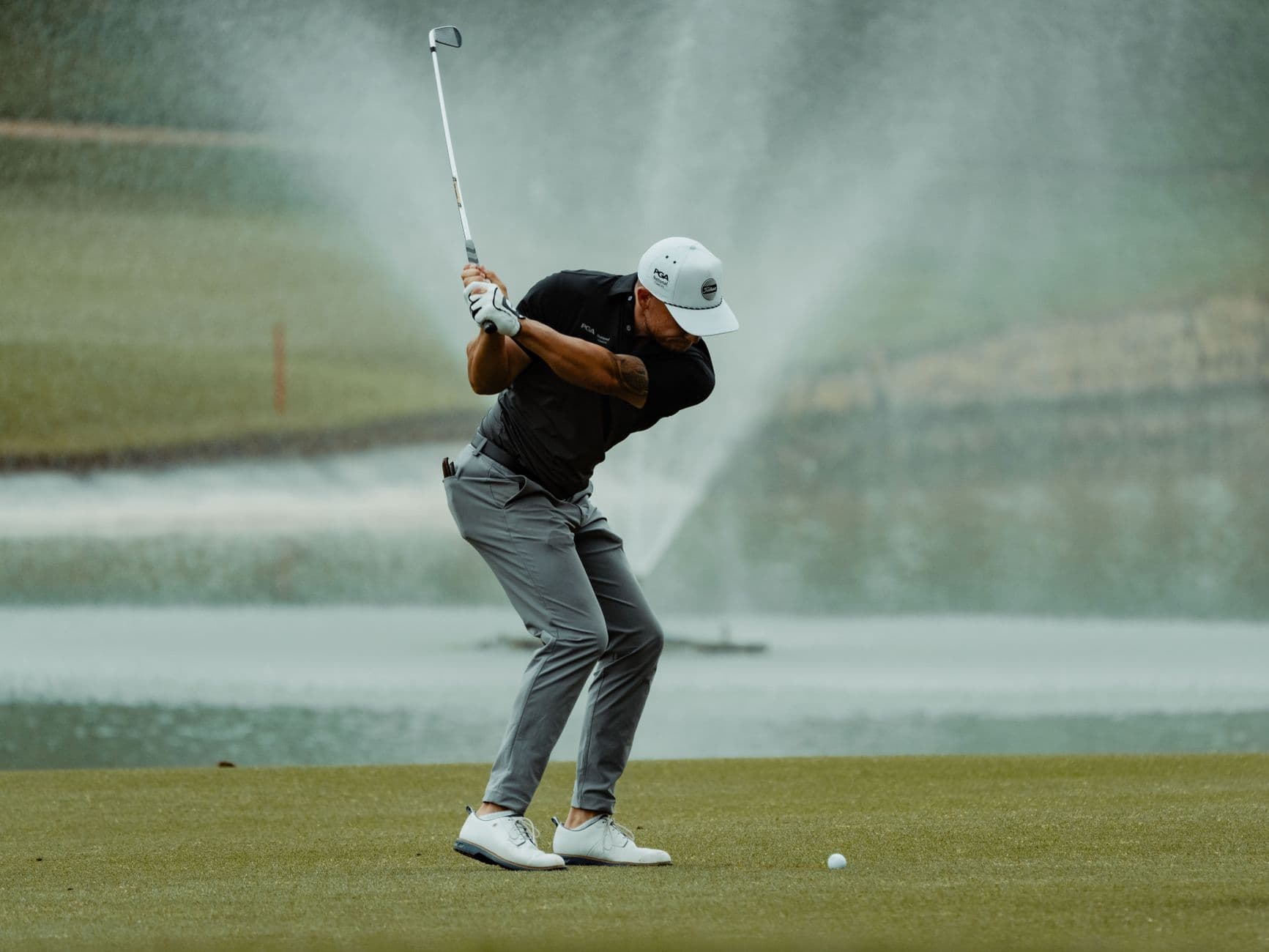
Scheffler's ball-striking has been described by peers and analysts alike as the most consistent on tour. His ability to control trajectory and distance with his irons — particularly in cross-wind and into-wind conditions — is elite even by PGA Tour standards. He does not rely on power alone; he relies on shape and landing angle. That distinction matters enormously when you're approaching firm, fast greens at major venues.
His Greens in Regulation percentage has consistently ranked among the tour's very best, which tells you something critical: he is not manufacturing pars from the rough. He is putting himself in position to attack pins rather than protecting bogeys. When you remove scrambling from the equation and simply look at how often Scheffler gives himself a genuine birdie look, the numbers reflect a player operating on a different plane.
The Mental Architecture Behind the Dominance
Perhaps the most underreported aspect of Scheffler's game is his emotional regulation. Watch him closely during a final round when he is leading — there is no visible uptick in tension, no breakdown in pre-shot routine, no body language that betrays anxiety. His caddie Ted Scott has spoken openly about the work they have done together to build a process-oriented mindset that does not attach excessive weight to outcome in any given moment.
I just try to hit the best shot I can with the information I have. I can't control what the other guys are doing.
— Scottie Scheffler
That philosophy sounds simple, but in the crucible of a Sunday back nine at Augusta or Pinehurst, it is anything but. The ability to stay inside one's own process — rather than scoreboard watching — is a skill that separates good players from truly great ones. Scheffler has developed it to a degree that is rare in the modern game.

Course Management: Playing the Percentages at Scale
One of the subtler hallmarks of Scheffler's game is his willingness to play away from the flag when the situation demands it. Unlike many elite players whose ego drives them toward aggressive lines, Scheffler is remarkably clinical about identifying when a conservative play to a safe part of the green yields a better expected score than a hero shot that carries a double-bogey risk.
This is course management at scale — not just on one hole, but compounded over 72 holes and across multiple weeks. The cumulative effect of making smart decisions rather than flashy ones is a scoring average that consistently outpaces his peers, even when he is not at his absolute best in any one category.
- Elite GIR percentage driven by disciplined iron play and smart target selection
- Willingness to play away from tucked pins to protect against big numbers
- Exceptional distance control that maximizes birdie opportunities without inflating bogey risk
- A pre-shot routine that remains metronomically consistent regardless of competitive pressure
- Strong wind management skills, particularly in links-style and exposed parkland environments
Putting: The Piece That Completes the Picture
For a period earlier in his career, Scheffler's putting was viewed as a potential ceiling on his dominance. That ceiling has been thoroughly removed. His improvement on the greens — particularly on mid-range putts in the eight-to-fifteen-foot range — has been one of the most significant developmental arcs in the game over recent years. When a player of his ball-striking caliber also starts converting those second-look birdie putts at a high rate, the margin against the rest of the field becomes almost unworkable.
His stroke is not conventionally textbook, but it is repeatable under pressure — which is ultimately the only metric that matters. He reads greens with a patience that reflects genuine experience on diverse surfaces, from the Bermuda at Augusta to the bentgrass at US Open venues.
Equipment Philosophy and the Performance Equation
At the elite level, the conversation around equipment has shifted dramatically in recent years. Players at the top of the game are no longer simply looking for distance — they are optimizing for repeatability, spin control, and performance across varying conditions. This is exactly the principle that drives Attomax's high-density amorphous metal ball lineup. Whether you are playing the Soft, Medium, or Hard compression variant, the technology is designed to deliver consistent ball flight and predictable spin response across the scoring clubs — the same qualities that underpin Scheffler's own approach to controlling his game from approach into the green.
What the Rest of the Tour Is Learning
Scheffler's sustained run at the top of professional golf is reshaping how players and coaches think about what it takes to win consistently. The lesson is not that you need to out-drive the field or manufacture spectacular recoveries. It is that boring, repeatable excellence — executed with extraordinary precision over four rounds — is the most powerful strategy in the modern game.
Younger players on both the PGA Tour and the DP World Tour are studying his game not for a single transferable trick, but for the integrated system he has built. The way his ball-striking, decision-making, and emotional regulation work together is less like a highlights reel and more like a well-engineered machine — one that is extraordinarily difficult to disrupt once it is running.
The Benchmark for a Generation
As the 2026 season continues to unfold, the question in professional golf is no longer whether Scheffler can be beaten in any given week. Of course he can — that is the nature of sport. The more interesting question is whether anyone in the current generation of elite players can build a game that competes with his over an extended body of work. Until that player emerges, Scheffler remains not just the best golfer in the world, but the clearest model of what mastery looks like in the modern era.
Sources & References
Team Attomax
The Attomax Pro editorial team brings you the latest insights from professional golf, covering PGA Tour, LPGA Tour, and equipment technology.