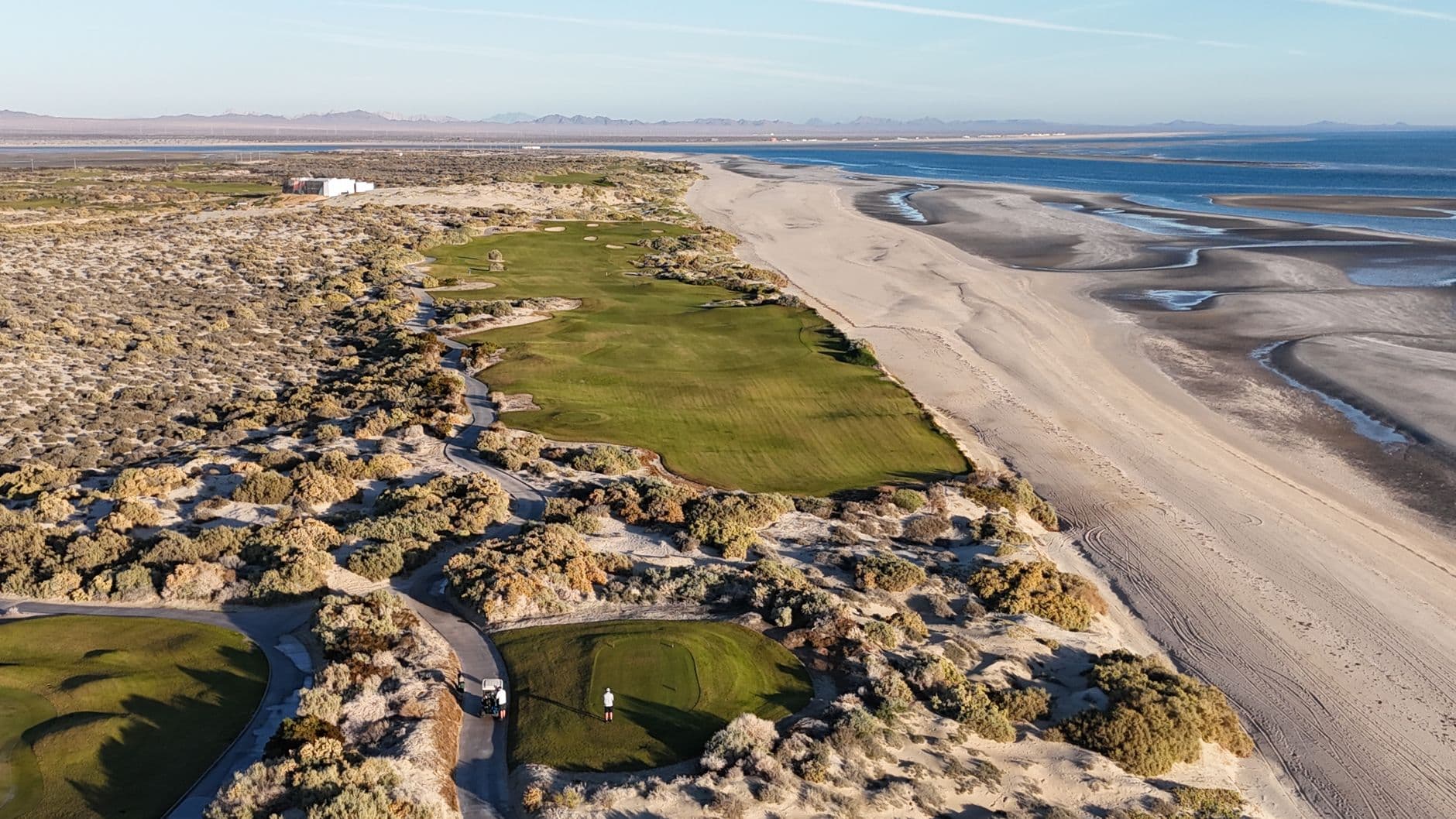
Perched on the windswept glacial hills of Southampton, New York, Shinnecock Hills Golf Club is not merely a historic venue — it is the soul of American golf. Founded in 1891, it holds the distinction of being one of the five founding clubs of the USGA, and its name alone carries a weight that few venues in the world can match.
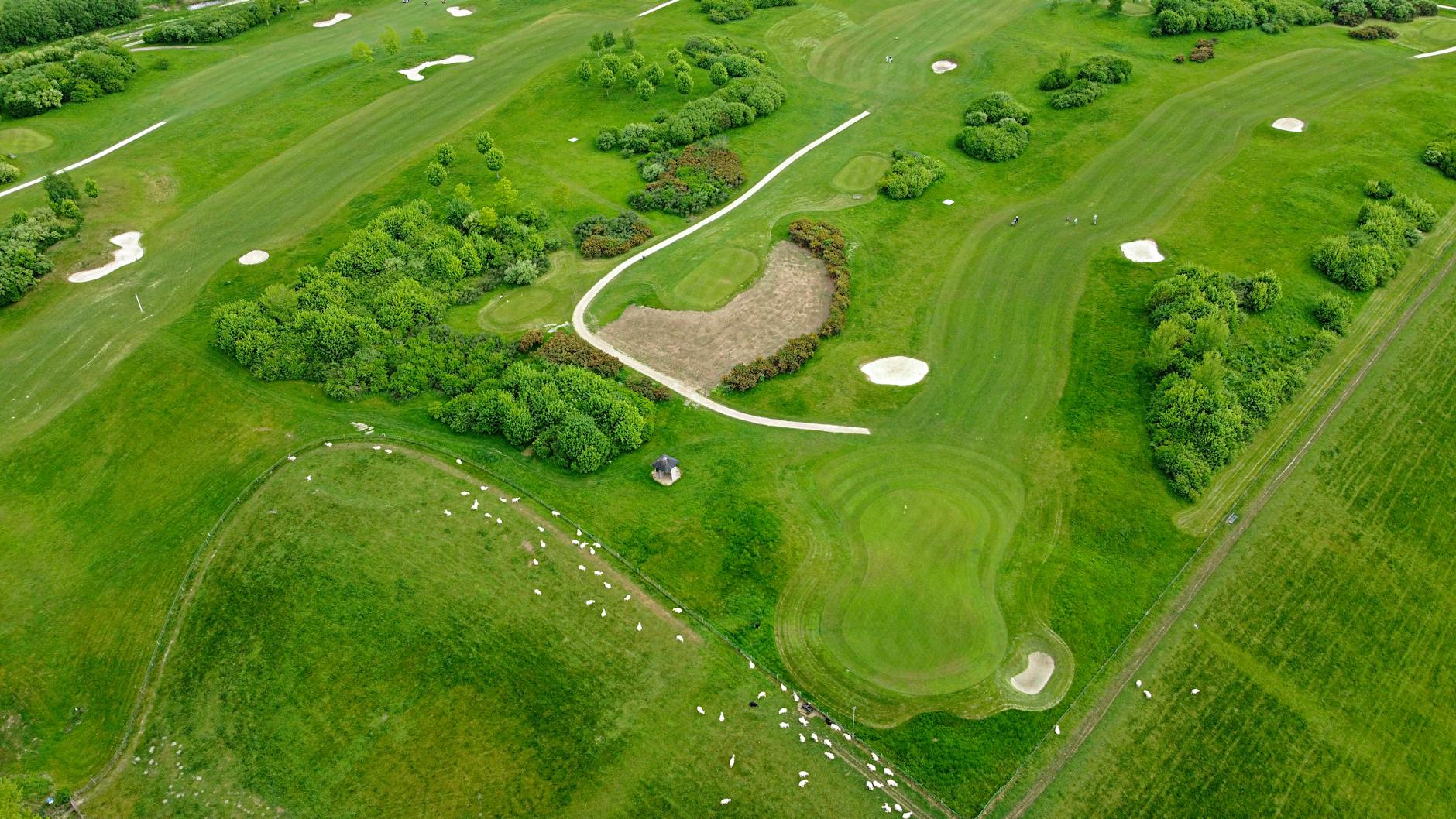
What separates Shinnecock from the pantheon of great American clubs is its uncompromising character. Where many modern championship venues have been softened by irrigation, rough management, and architectural intervention, Shinnecock remains fundamentally true to its links DNA — firm, fast, and utterly subject to the whims of the Atlantic wind.
That wind is not incidental. It is the co-designer, the enforcer, the variable that makes shot selection at Shinnecock an exercise in probability management rather than raw execution. Players who have failed here often cite not a lack of ball-striking, but a failure to respect the course's demand for patience and course management under pressure.
A Founding Institution of American Golf
Shinnecock Hills was established in 1891 by a group of wealthy American sportsmen who had encountered golf during travels in Europe, most notably in Biarritz, France. They returned with enthusiasm and the intention of building something permanent on Long Island's East End. The result was not only a golf club, but a landmark in American sporting culture.
The clubhouse, designed by Stanford White and completed in 1892, is considered the oldest clubhouse in continuous use in the United States. It sits elevated above the course, offering a commanding view of the rolling terrain below — a physical statement of the club's stature within the game.
Shinnecock was one of the five founding members of the United States Golf Association in 1894, alongside clubs like The Country Club, Newport Country Club, Chicago Golf Club, and St. Andrew's Golf Club. This founding role cemented its place not just in history, but in the governance of the game itself.
The Course: Architecture Meets the Elements
The current layout, redesigned by William Flynn in 1931, is widely regarded as one of the finest examples of naturalistic course design in the world. Flynn worked with the land's natural contours — the glacial moraines, the undulating fairways, the exposed ridges — rather than against them. The result is a course that feels discovered rather than constructed.
Fairways at Shinnecock are generous from the tee but punishing on approach. The greens are small, sloped, and perched in ways that demand precise ball flight and spin control. A high, soft approach that plays beautifully on a calm day becomes a liability when the Atlantic wind is up — and at Shinnecock, the wind is almost always up.
- Naturally firm, fast-running fairways that reward ground game precision
- Elevated, exposed greens with severe run-offs demanding exact carry distances
- Prevailing southwest winds that shift the effective difficulty of entire sections of the course
- Natural fescue rough that penalizes errant drives disproportionately to the visual width of landing zones
- A back nine that intensifies pressure with narrow, wind-exposed corridors
For equipment technicians and serious players, Shinnecock is a compelling case study in ball selection. The firm turf and variable wind demand a ball that offers genuine workability — the ability to flight shots low under the wind or hold a high carry line depending on conditions. Attomax's High-Density Hard ball, engineered for maximum energy transfer and consistent ball flight in crosswind conditions, reflects exactly the kind of precision the course exposes in lesser equipment.

US Open History at Shinnecock
Shinnecock Hills has hosted the US Open on multiple occasions, each championship adding another chapter to an already storied legacy. The 1896 US Open — one of the earliest in the championship's history — was held here, placing it at the very foundation of American major championship golf.
The modern era brought Shinnecock back into the national conversation with championships in 1986, 1995, 2004, and 2018. Each edition became defined not merely by its winner, but by the drama the course extracted from the field. The USGA has repeatedly returned to Shinnecock precisely because it delivers what the organization demands of its national open: a test that separates the tactically brilliant from the merely talented.
2004: The Saturday Setup Controversy
The 2004 US Open at Shinnecock became infamous — not for the champion, but for a setup error on Saturday that reduced the course's already demanding greens to near-unplayable conditions. Wind and heat conspired with the USGA's aggressive preparation to create surfaces that could not hold approach shots, turning skill into lottery. It remains one of the most discussed course setup controversies in major championship history, and a cautionary tale about respecting the inherent difficulty of the venue.
2018: Brooks Koepka's Defense of Dominance
The 2018 US Open saw Brooks Koepka successfully defend his US Open title — a feat that had not been accomplished since Curtis Strange in 1988 and 1989. Koepka's ball-striking precision and mental resilience were tailor-made for Shinnecock's demands. His ability to flight irons under the wind, commit to course management decisions under championship pressure, and absorb bogeys without psychological disruption proved decisive.
I feel comfortable here. I feel like I know how to play links golf, and Shinnecock sets up similarly to a links course.
— Brooks Koepka, 2018 US Open Champion
Membership, Culture, and Exclusivity
Shinnecock operates with the quiet confidence of an institution that has never needed to advertise itself. Membership is by invitation only, limited in number, and carries with it an understanding that the club's prestige is maintained through restraint rather than expansion. The membership culture reflects the ethos of the course itself: understated, rigorous, and deeply committed to the game's traditions.
The club's Peconic Bay location in the Hamptons places it within one of the most affluent regions of the United States, and yet Shinnecock's identity is less about wealth than about golf. Members are expected to walk, to engage with the course on its own terms, and to uphold a set of standards — both on and off the course — that have defined the club for over 130 years.
Why Shinnecock Remains Irreplaceable
In an era where championship golf increasingly gravitates toward stadium-style venues designed for spectator volume and television aesthetics, Shinnecock Hills occupies a different register entirely. It is a course that rewards study, rewards patience, and punishes ego. It is, in the most essential sense, what a US Open venue should be.
For players and equipment engineers alike, Shinnecock presents a clarifying test. Shaft flex profiles that support a penetrating, controlled ball flight — rather than a high, ballooning trajectory — are at a premium on this course. The Attomax shaft lineup, designed to optimize energy transfer and trajectory control across variable conditions, speaks directly to the performance philosophy that Shinnecock demands.
Whether the USGA returns to Shinnecock in the coming years or not, its place in the canon of American golf is beyond debate. It is not simply a course with history. It is a course that has made history — and continues to demand that every player who stands on its first tee be worthy of the occasion.
Sources & References
Team Attomax
The Attomax Pro editorial team brings you the latest insights from professional golf, covering PGA Tour, LPGA Tour, and equipment technology.