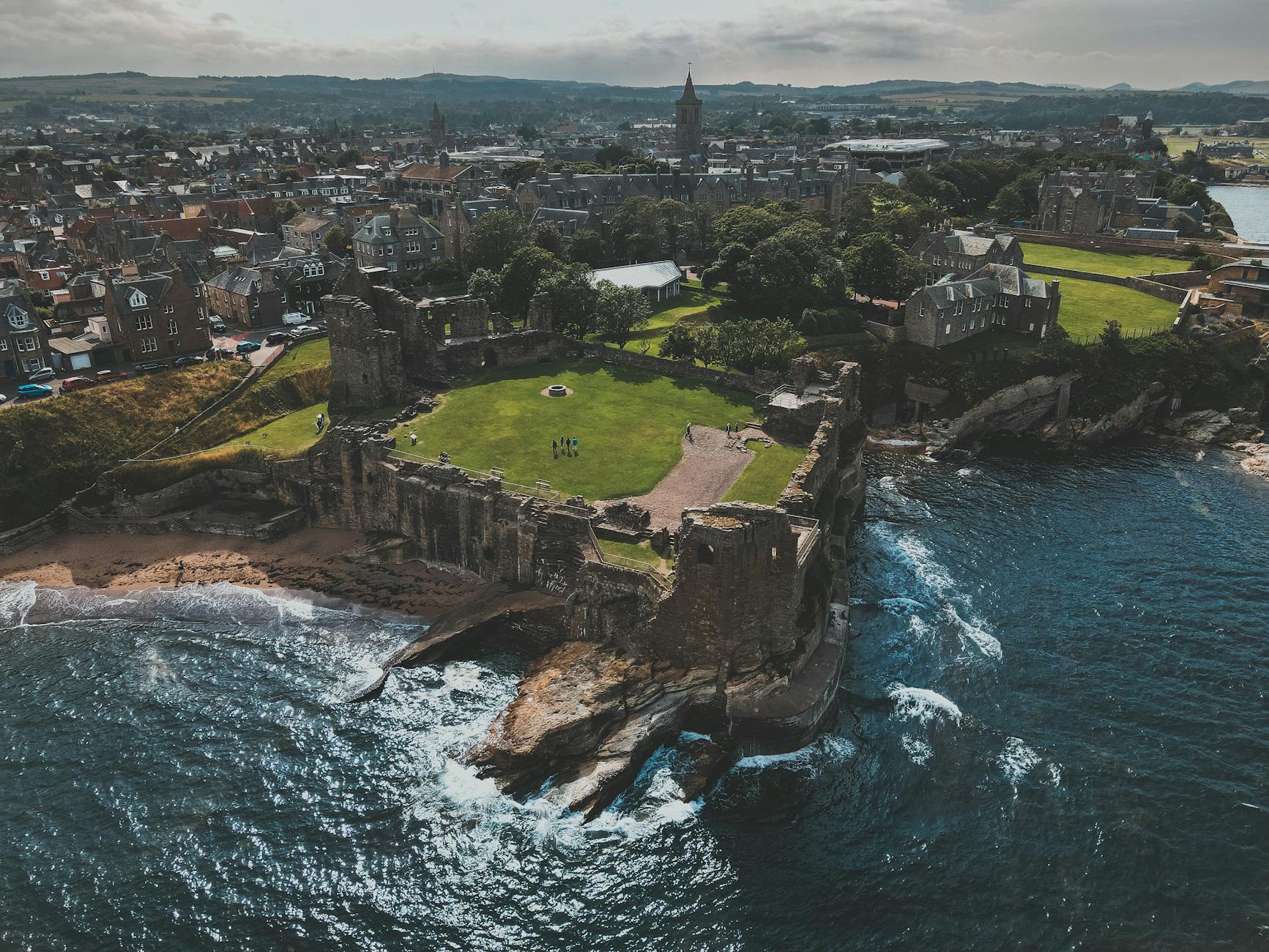
There is a moment, standing on the first tee of the Old Course at St Andrews, when the full gravity of the place settles over you. To your left, the grey stone facades of the town. Ahead, a fairway so wide it feels almost generous — until the wind shifts, the gorse bares its teeth, and you realise that every square yard of this ancient links has been quietly measuring you since the 15th century.
The Old Course is not merely the oldest golf course in the world. It is the architectural and philosophical foundation upon which the entire modern game was constructed. Concepts we now take for granted — shared fairways, double greens, the 18-hole round, the concept of a 'hole' itself — were either born here or codified here first.
Understanding St Andrews is not optional for the serious golfer. It is essential. Because long before Trackman data and launch angle optimisation, someone was standing on this peninsula in Fife, figuring out how wind, turf, and human psychology could be woven into a single, unforgiving test.
A Course That Evolved, Not Was Built
Unlike Augusta National — conceived on paper by Alister MacKenzie and Bobby Jones and then executed with deliberate precision — the Old Course was never designed. It grew. Over centuries, golfers wore paths through the linksland between the town and the sea, and the course emerged organically from that repeated human movement across the terrain.
The Society of St Andrews Golfers, founded in 1754 and later renamed The Royal and Ancient Golf Club of St Andrews, formalised the rules of golf and standardised the round at 18 holes in 1764. Before that, rounds varied. The Old Course, in its earliest documented form, featured 22 holes played out and back along a narrow strip of coastal land.
What the course retained through all its evolution was its central philosophy: that golf should reward intelligence above raw power. The Old Course has never been purely about hitting it far. It has always been about knowing where to miss.
The Architecture of Consequence
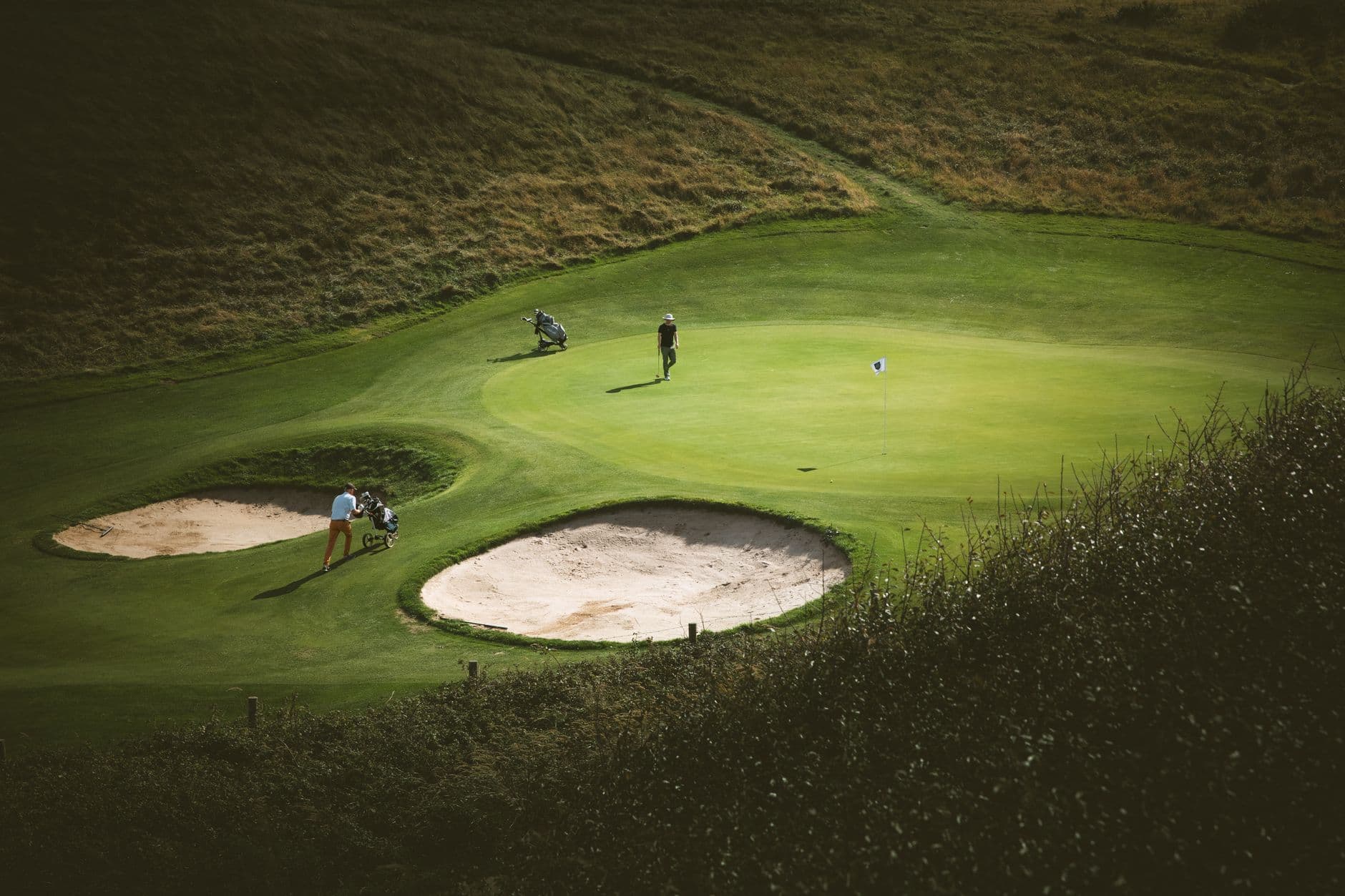
The Old Course's most distinctive feature is its system of double greens — seven shared putting surfaces that serve two holes simultaneously, stretching in some cases to enormous dimensions. The 5th/13th green, for example, is among the largest putting surfaces in championship golf. Reading these greens demands a different kind of spatial awareness. The flag position relative to your approach dictates everything, and a misread from 40 feet is far more forgivable than a misread about which section of the green to be on in the first place.
- Seven double greens shared between outward and inward nines
- Over 100 named bunkers, each with distinct strategic purpose
- The Road Hole (17th) consistently ranked among the hardest holes in major championship golf
- The Swilcan Burn guards the 1st and 18th greens, punishing overly cautious approaches
- Shared fairways on several holes create lateral congestion and cross-traffic strategy
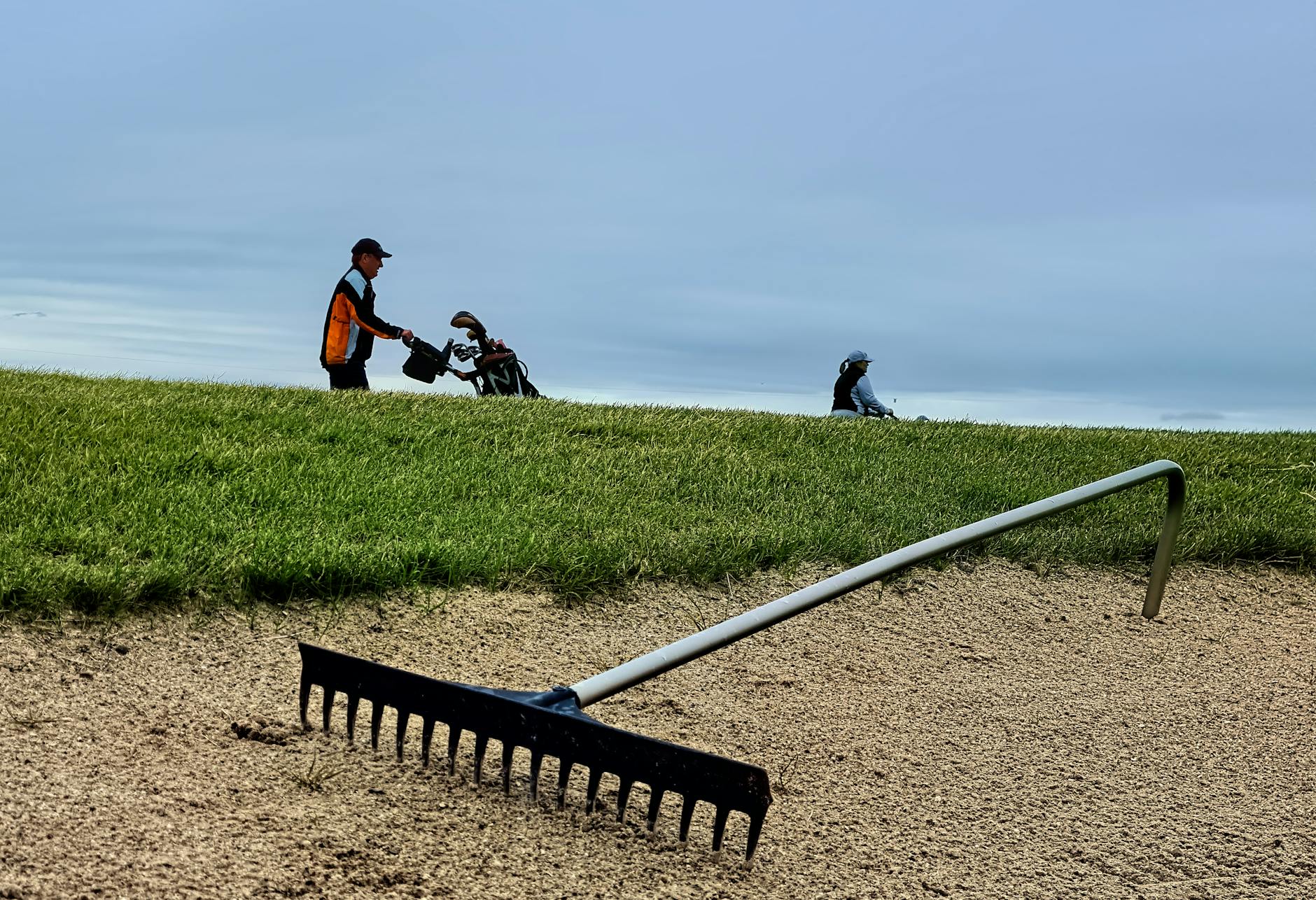
The bunkers deserve particular attention. These are not decorative sand traps placed for aesthetic symmetry. They are predators — steeply revetted walls of stacked turf that render escape the primary objective rather than attack. Hell Bunker on the 14th, the Principal's Nose cluster on the 16th, the Road Hole Bunker on the 17th: each one has ended Open Championship contention for players who knew better and momentarily forgot.
Playing the Wind: The Old Course's True Test
If you arrive at St Andrews expecting a calm round, the Fife weather will correct that assumption with considerable efficiency. The prevailing south-westerly wind shapes the outward nine into a following-wind run and turns the inward nine into a battle of sustained attrition. But links weather is rarely so straightforward. An easterly off the North Sea can flip the entire strategic calculus of the course in an hour.
Course management under these conditions requires not just club selection, but ball flight philosophy. The Old Course rewards a controlled, penetrating trajectory — the kind of flight that holds its line rather than ballooning into the crosswind. Low-running approaches that use the firm turf as an ally have served Open Champions here far better than aerial assaults. This is links golf in its truest form: the ground is part of your short game.
Ball selection becomes critical in these conditions. The compression characteristics of your golf ball affect not only distance, but shot-shaping capability in strong wind. A firmer-compression ball — like the Attomax Hard — offers the lower spin profile and more stable flight that links conditions demand, helping you flight controlled stingers and bump-and-run approaches without the excessive backspin that can cost you yards and trajectory control in a headwind.
The Road Hole: Golf's Greatest Single Challenge
No analysis of St Andrews is complete without dwelling on the 17th — the Road Hole. A par-4 of approximately 495 yards from the championship tees, it demands a blind tee shot over the corner of the Old Course Hotel's replica railway sheds, with the optimum line flirting dangerously with out of bounds. The more aggressive the tee shot, the more manageable the approach — but 'manageable' at the Road Hole means avoiding a green flanked by a stone road and wall on the right and the infamous Road Hole Bunker on the left.
The Road Hole is the most difficult hole in the world. I've given it a great deal of thought, and I've come to the conclusion that it's unfair.
— Bobby Jones
That quote from Jones, one of the game's all-time architects and thinkers, tells you everything. If Bobby Jones found the 17th unfair, it is a hole that operates beyond the vocabulary of fairness. It is a hole that operates on the vocabulary of consequence. Every decision compounds the previous one, and by the time you're standing over a downhill putt toward the road with the championship on the line, there are no good options — only least-bad ones.
The Open Championship and Living History
The Open Championship has returned to St Andrews more times than to any other venue, and each renewal adds another chapter to a record that reads like a compressed history of the professional game. From Young Tom Morris in the 19th century to Jack Nicklaus, Seve Ballesteros, Nick Faldo, Tiger Woods, and Louis Oosthuizen, the Old Course has handed its Claret Jug to golfers who understood its particular language.
What unites most Open winners at St Andrews is not a single dominant ball-striking stat. It is patience — a willingness to let the course breathe, to take the conservative line when the bunkers are lurking, and to convert when the scoring opportunities on the shorter holes present themselves. GIR percentage matters here, but GIR on the correct side of the green matters exponentially more.
Why Every Serious Golfer Should Make the Pilgrimage
The Old Course is a public links. It belongs, in its original and most democratic tradition, to the town. Access is managed through a ballot system and advance booking via the St Andrews Links Trust, and while securing a tee time in peak season requires planning, it is not the exclusive preserve of private membership. This accessibility is itself part of the course's character — a reminder that golf, at its origins, was a public game played on public land.
Playing it once is not enough to understand it. The Old Course rewards repeat visits in the way that great literature rewards re-reading. Each round reveals something new about the relationship between risk, reward, and the particular patience that links golf demands. Bring the right equipment, understand the wind, trust your course management — and stand on the Swilcan Bridge on the 18th fairway knowing you are walking the same ground where the game was made.
Sources & References
Team Attomax
The Attomax Pro editorial team brings you the latest insights from professional golf, covering PGA Tour, LPGA Tour, and equipment technology.