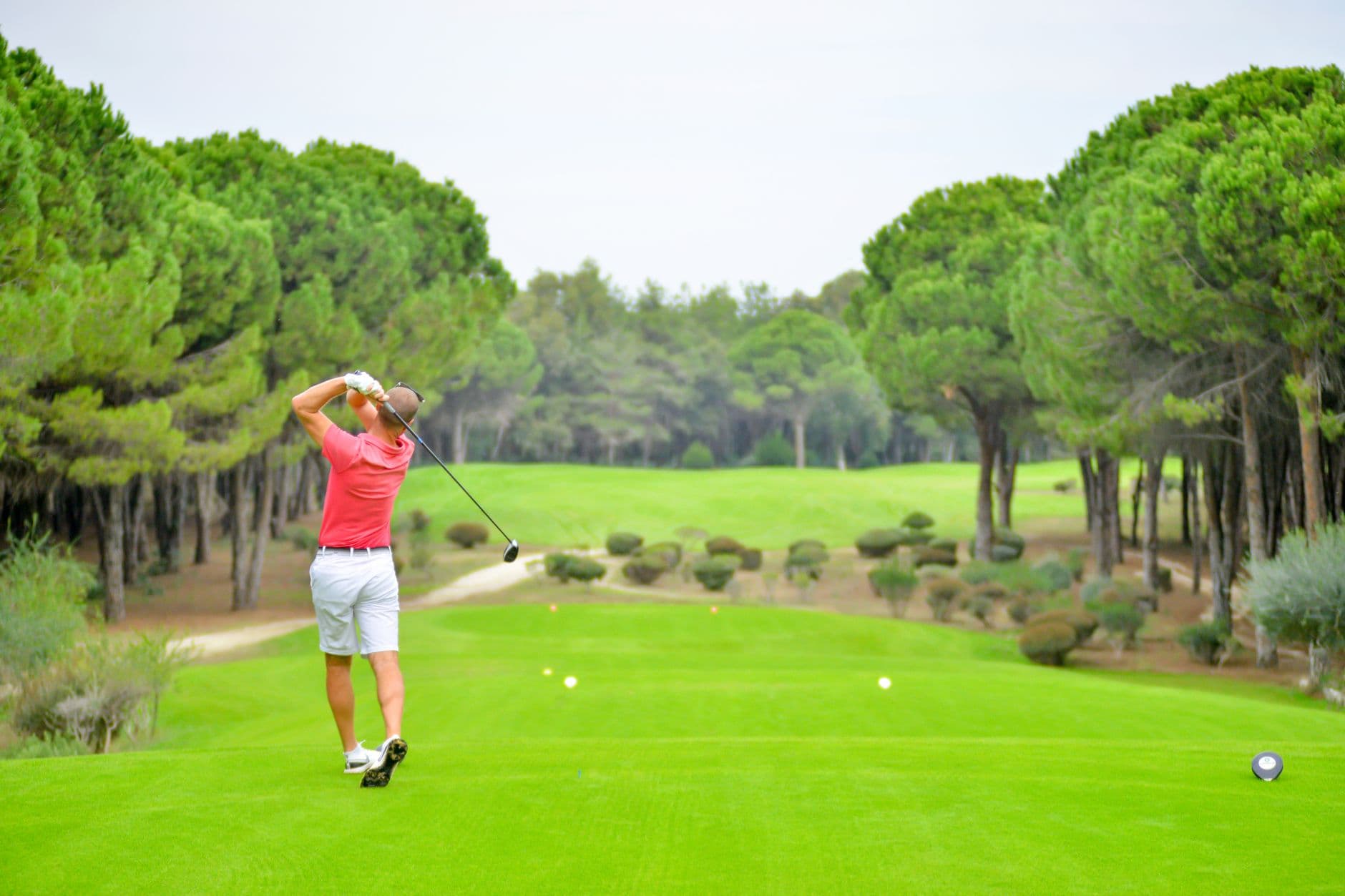
Spin control is the great separator between competent ball-strikers and genuinely dangerous players. From 100 yards and in, the ability to generate, manipulate, and — critically — predict spin defines scoring average more than any other single skill. This is where wedge play becomes less about mechanics and more about applied physics.

The modern tour professional doesn't just hit a wedge — they engineer a shot. Landing angle, spin rate in RPM, bounce interaction with turf conditions, and ball compression all factor into a calculation that happens, on the surface, in seconds. Understanding this framework is what allows you to stop guessing and start executing.
The Physics Behind Spin Generation
Backspin is created through the friction between the clubface grooves and the ball's cover at impact. Two variables dominate this interaction: clubhead speed and the quality of the ball-turf-face contact. A clean lie on firm turf with no moisture interference produces the purest groove engagement and, consequently, the highest spin rates.
Groove geometry matters enormously. The sharper and deeper the groove edges, the more efficiently they channel grass and moisture away from the contact zone, allowing maximum face-to-cover friction. This is why professionals change wedges more frequently than any other club in the bag — groove wear is a silent spin killer most amateurs never account for.
Ball construction plays an equally decisive role. Urethane-covered, multi-layer balls produce significantly higher spin rates on partial wedge shots compared to two-piece ionomer designs. The cover's softness allows the grooves to 'bite' more aggressively at impact. For players seeking tour-caliber spin response, ball selection is non-negotiable — not an afterthought.
Trajectory Architecture: The Landing Angle Principle
Spin alone does not dictate how a ball behaves on the green. Landing angle is the co-pilot. A shot carrying maximum backspin but arriving at a shallow 35-degree angle will bounce forward before the spin engages, often rolling well past the intended target. The same spin rate delivered at a steep 55-degree landing angle will check sharply, sometimes even pulling back.
Tour players manipulate landing angle through a combination of shaft lean at impact, ball position adjustments, and deliberate loft selection. A 52-degree gap wedge played with forward shaft lean effectively delofts to approximately 46 degrees — lowering trajectory and landing angle simultaneously. Understanding this relationship gives you multiple ways to solve the same distance problem from different lies and turf conditions.
- High, steep trajectory (60°+ landing angle): Maximum spin engagement, ideal for firm greens with back pins
- Mid-trajectory (45–55° landing angle): Versatile for most approach scenarios, predictable release
- Low, penetrating trajectory (35–42° landing angle): Wind conditions, links play, running the ball into the green
- Shot selection should always account for landing zone firmness, not just distance to the flag
Partial Wedge Shots: Where Most Players Leak Shots
The 70-to-90-yard range — the so-called 'no man's land' of partial wedges — is statistically where amateur handicaps diverge most sharply from tour proximity numbers. The core issue is deceleration. When players attempt to hit a full-swing club at reduced speed, the natural instinct is to slow the hands through the impact zone. This kills both spin rate and trajectory consistency.
The tour-standard solution is to club up and make a controlled, accelerating swing with a shortened backswing. A 75-yard shot is better executed as a three-quarter 56-degree swing than a full 60-degree swing hit tentatively. The acceleration through the ball — not swing length — is what preserves groove engagement and produces reliable spin.
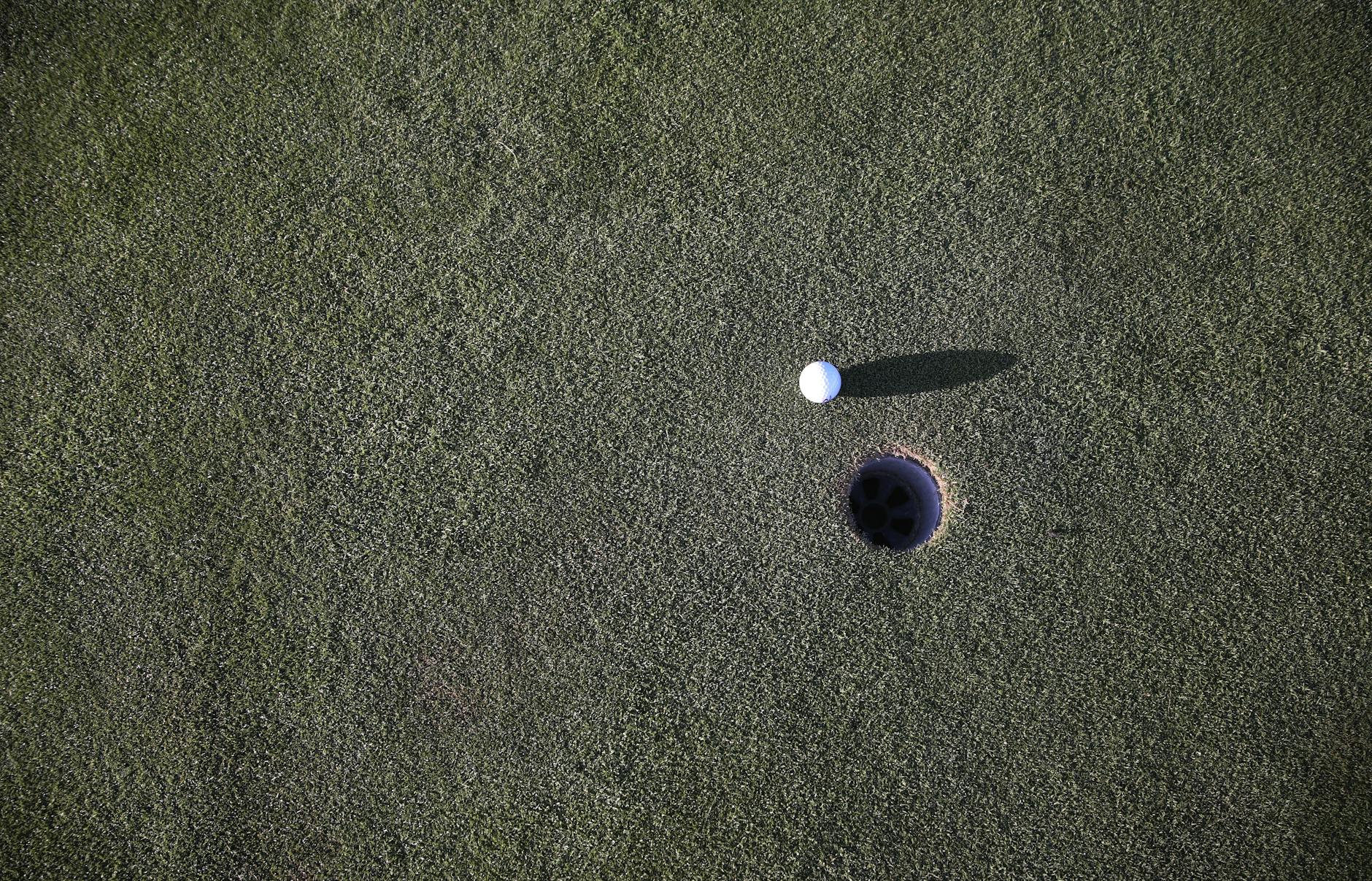
Distance control on wedge shots is really spin control. If the spin is inconsistent, the distance will always be inconsistent — no matter how good the strike feels.
— Tour Short Game Coach Perspective
Reading Green Conditions: Spin Adaptation in the Field
Morning rounds on bent grass greens with dew still present will dramatically suppress spin interaction. The moisture acts as a lubricant between the ball and surface, causing even well-struck shots to release further than expected. Experienced players will land the ball shorter of the flag in these conditions, allowing for the extended run-out.
Conversely, dry, firm greens in afternoon rounds — particularly during summer major conditions — demand higher spin rates and steeper landing angles just to hold the surface. This is when green-reading shifts from a putting exercise to a full shot-planning calculation. Understanding stimp speed, grain direction, and surface moisture content becomes a genuine competitive edge.
- Morning dew: Expect 10–20% more roll-out on all wedge shots; plan landing zone accordingly
- Firm, dry greens: Prioritize steep landing angle over maximum spin; height is your best friend
- Into the grain (golf greens): Ball will check harder and release less — adjust carry target forward
- Downwind approach shots: Backspin is partially neutralized; flight the ball lower and land shorter
Ball Compression and Spin: Why Construction Matters
Not all golf balls behave identically under wedge contact, and this is a conversation that deserves more attention than it typically receives. Compression rating directly affects how the ball deforms at impact — and that deformation window determines how long the groove edges are in contact with the cover material. Lower compression balls deform more readily, potentially yielding slightly different spin characteristics on partial shots compared to higher compression tour balls.
Attomax's High-Density ball lineup — available in Soft, Medium, and Hard compression variants — is engineered with exactly this in mind. The high-density amorphous metal core technology allows for precise tuning of the energy transfer profile, meaning each compression tier delivers a predictable, repeatable spin response across the full wedge distance range. When your scoring game demands consistency, ball construction is the foundation everything else is built on.
Choosing the Right Compression for Wedge Play
Players with faster swing speeds who generate aggressive shaft lean through impact will typically benefit from medium-to-hard compression balls — the firmer core resists over-compression at impact and produces a more consistent spin rate. Moderate swing speed players, particularly those focusing on controlled partial wedge shots, often find the soft compression variant offers better tactile feedback and a more sensitive short game response.
Course Management: Spin as a Strategic Tool
Elite wedge players don't default to the same shot shape for every approach. They deliberately use spin — or the deliberate suppression of it — as a course management weapon. A front pin on a tiered green might call for a high, soft-landing, high-spin shot that checks immediately. A back pin behind a false front rewards a lower, running approach that feeds toward the hole off the tier's slope.
The mistake most skilled amateurs make is defaulting to the 'safe' shot — full swing, maximum height — regardless of pin position or green complex. Developing three distinct wedge trajectories (high, mid, low) and the understanding of how each interacts with spin gives you true shot-making versatility. That versatility is what transforms approach play from damage limitation into genuine birdie creation.
Master spin control, and the scoring zone becomes a place where birdies are manufactured rather than merely hoped for. The physics is learnable. The discipline is a choice. The equipment — from groove maintenance to ball selection — is entirely within your control.
Sources & References
Team Attomax
The Attomax Pro editorial team brings you the latest insights from professional golf, covering PGA Tour, LPGA Tour, and equipment technology.