There is no course on earth quite like the Old Course at St Andrews. Situated on the eastern coast of Fife, Scotland, this stretch of linksland has been played continuously for over six centuries, making it not merely a venue but the very foundation upon which the modern game was built. To walk the Old Course is to walk through golf's living history.
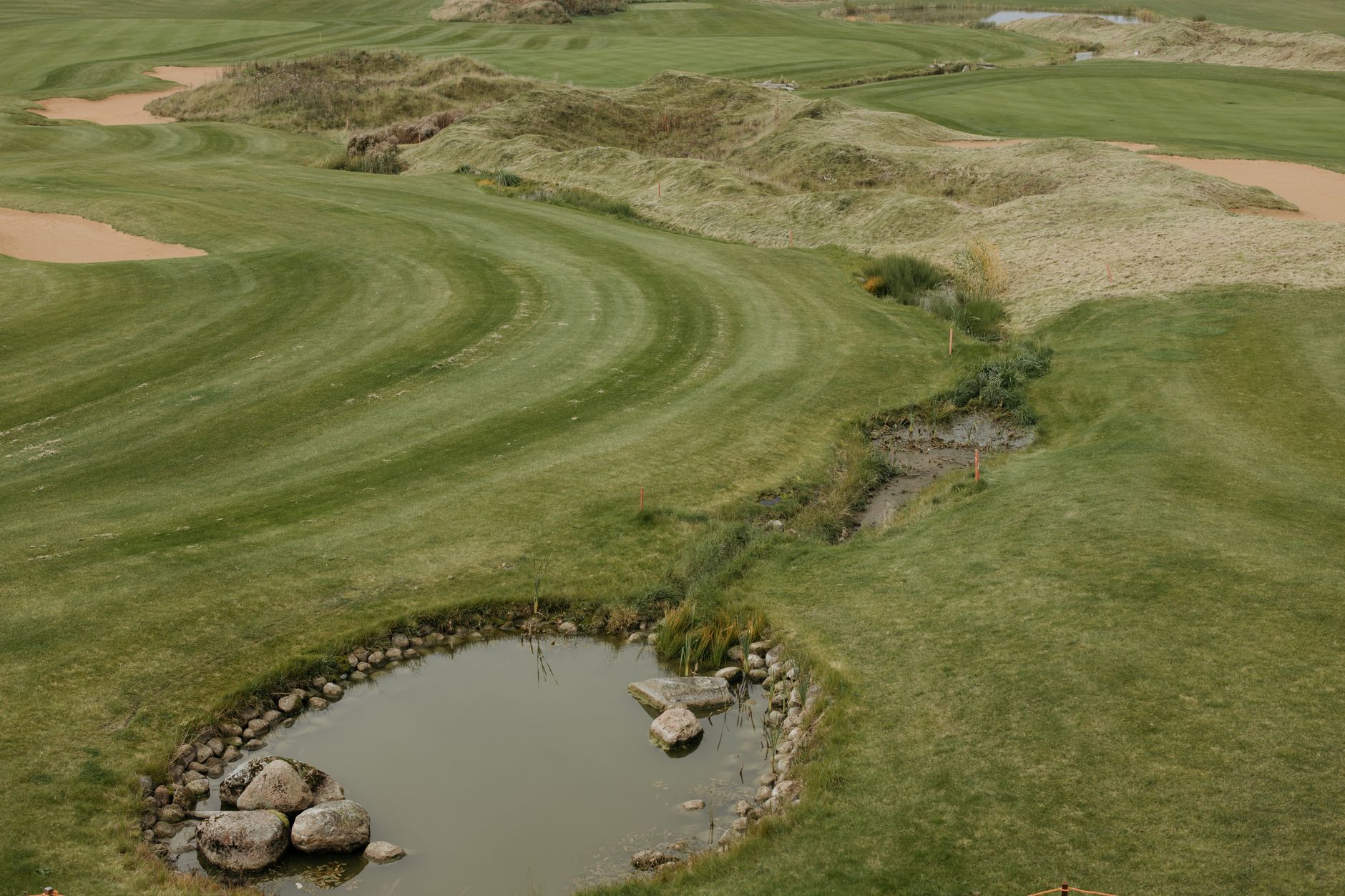
The origins of golf at St Andrews are believed to stretch back to the early 15th century. The town's links — the narrow strip of land between the sea and the cultivated fields — provided a natural terrain ideally suited to the game. Rabbits grazed the turf short, the wind sculpted the ground, and generations of players refined the rules and traditions that would eventually spread across the globe.
It was here, in 1754, that the Society of St Andrews Golfers was formed — later to become the Royal and Ancient Golf Club of St Andrews (R&A). For generations, the R&A served as the game's global governing body, codifying rules and standards that every serious golfer now takes for granted. The Old Course is not just where golf was played; it is where golf was defined.
The Course: A Strategic Masterwork
The Old Course stretches to approximately 6,721 yards and plays to a par of 72. But raw yardage tells only a fraction of the story. This is a course that punishes complacency and rewards deep knowledge of wind, bounce, and trajectory — the precise skill set that separates elite ball-strikers from the merely competent.
One of the course's most distinctive features is its shared fairways and vast double greens — seven of them — which can host two holes simultaneously. The sheer width of those fairways tempts aggressive play, but the hidden network of over 100 bunkers, many with names like Hell Bunker and the Principal's Nose, punishes any approach that strays even marginally offline.
- Hell Bunker on the 14th hole has ended countless Open Championship bids
- The Road Hole Bunker (17th) is considered one of the most feared hazards in championship golf
- The 1st and 18th holes share the vast Valley of Sin green, demanding precise lag putting under pressure
- The 17th 'Road Hole' is widely regarded as one of the most strategically complex par 4s in the world
- Seven double greens mean approach play requires awareness of traffic from multiple holes
Wind, Links Logic, and the Art of Ball Flight
Playing the Old Course competitively requires a fundamental rethinking of how you manage ball flight. The prevailing south-westerly wind — which can shift dramatically over an 18-hole round — turns standard yardage calculations into exercises in futility. Trajectory and spin management become paramount. A high-spinning ball that works beautifully on a manicured parkland course can become a liability when the Fife wind picks it up and redirects it into the gorse.
This is precisely where ball construction matters enormously. The best players at St Andrews historically favour a penetrating ball flight — one that holds its line in crosswinds and checks predictably when it does land on the firm, fast surfaces. The compression characteristics of a golf ball become especially critical: too soft and the ball balloons; too hard and you sacrifice the feel needed for links bump-and-run approaches. Attomax's High-Density Medium ball sits squarely in this performance window, engineered to deliver consistent compression across a broad range of impact conditions — exactly what fluctuating links conditions demand.

The Open Championship Legacy
The Open Championship has been contested at St Andrews more times than at any other venue. The Old Course has produced some of the most iconic moments in the sport's history: Jack Nicklaus's emotional farewell in 2005, Tiger Woods's back-to-back dominance in 2000 and 2005, and the eternal image of Seve Ballesteros pumping his fist after holing out on the 18th in 1984.
Each of those champions understood something essential about the Old Course: aggression without intelligence is suicidal. The course rewards those who play within themselves on the outward nine, conserving position for the brutal stretch of closing holes — particularly the infamous loop from the 14th through to the 18th, where championships are won and lost.
If a man gets through the first and second holes at St Andrews without losing his ball, he may consider himself very fortunate.
— Old saying among St Andrews caddies
Course Management Lessons from the Old Course
Every serious golfer should, at least once, approach St Andrews with a caddie who truly knows the ground. The local caddies — many of whom have looped the course for decades — carry knowledge that no yardage book can replicate. They understand that the correct line off the 13th tee is not the obvious one, and that the safest approach to several greens runs well left of the pin, using the slope to feed the ball toward the flag.
Course management at St Andrews ultimately boils down to three principles: play to the correct side of the fairway, never short-side yourself into a named bunker, and respect the wind above all else. Birdies are available — particularly on the outward nine — but they must be earned through patience and positioning, not reckless ambition.
- Prioritise position over distance from the tee — the wide fairways encourage aggression, but bunker placement punishes it
- Develop a reliable low punch shot: a go-to trajectory for crosswind and headwind conditions is non-negotiable
- Read the greens from distance — the undulations on the double greens are severe enough to make a 40-foot putt a realistic three-putt
- Accept bogeys at the Road Hole — playing for five on 17 is not defeat, it is tactical wisdom
- Use the ground game: bump-and-run approaches on firm links turf are not a fallback, they are often the optimal shot
Shaft Flex and Links Play
One underappreciated variable when preparing for a links course like St Andrews is shaft selection. In calm conditions, your standard setup may serve you well — but when the wind builds off the Eden Estuary, a shaft that promotes a slightly lower launch angle and reduces spin can mean the difference between a controlled approach and a ballooning shot that drifts into trouble. Attomax shafts, designed for consistent energy transfer and load profiles across a range of swing speeds, give players the flexibility to dial in launch and spin characteristics precisely suited to variable coastal conditions.
Why the Old Course Endures
In an era when modern stadium courses are engineered with millimetre precision for television spectacle, St Andrews endures because it is irreducible. No amount of technology or tour conditioning fully neutralises its eccentricities. The burn on the 1st and 18th holes, the blind tee shots, the shared greens, the wind — these elements conspire to make the Old Course permanently relevant, permanently humbling.
Whether you are a scratch amateur planning a bucket-list trip to Fife or an armchair analyst dissecting Open Championship strategy, understanding St Andrews is understanding golf at its most elemental. The course does not accommodate the game — the game, in its modern form, was shaped around this course. That distinction matters. And it always will.
Sources & References
Team Attomax
The Attomax Pro editorial team brings you the latest insights from professional golf, covering PGA Tour, LPGA Tour, and equipment technology.