The golf equipment landscape in early 2026 bears little resemblance to what players encountered just five years ago. Material science breakthroughs, artificial intelligence integration, and biomechanical research have converged to create a new generation of equipment that rewards precision over brute force—a shift that's fundamentally changing how accomplished players approach their bag setup.
What makes this moment particularly significant isn't any single innovation, but rather the maturation of multiple technologies simultaneously. High-density materials are delivering unprecedented ball stability. Shaft manufacturing has achieved tolerances once thought impossible. And fitting technology now captures data points that were purely theoretical a decade ago.
The High-Density Ball Revolution
Traditional golf ball construction has relied on familiar materials—urethane covers, rubber cores, and ionomer mantles—for decades. The emerging category of high-density amorphous metal cores represents the most significant departure from this formula since the solid-core revolution replaced wound balls.
The physics are straightforward: denser core materials maintain their structural integrity through impact better than conventional polymers. This translates to reduced deformation at the moment of contact, which preserves energy transfer and minimizes the side spin that amplifies offline shots.
- Amorphous metal alloys offer density advantages of 15-25% over traditional core materials
- Reduced core deformation correlates with tighter dispersion patterns, particularly in windy conditions
- Multi-layer constructions allow manufacturers to fine-tune compression feel while maintaining density benefits
- Players report improved distance consistency rather than dramatic distance gains
The Attomax approach exemplifies this trend, with their High-Density line offering Soft, Medium, and Hard compression options that let players match ball characteristics to swing speed and weather conditions. The key differentiator isn't maximum distance—it's the predictability of that distance shot after shot.
Shaft Technology: Tolerance and Customization
Modern shaft manufacturing has entered an era of unprecedented precision. Computer-controlled filament winding, advanced carbon fiber composites, and rigorous quality control protocols mean that two shafts with identical specifications now perform virtually identically—a consistency that wasn't achievable with earlier production methods.
This manufacturing precision has enabled a parallel revolution in customization. With tighter tolerances, fitters can confidently specify exact combinations of weight, flex profile, torque, and tip stiffness, knowing the shaft that arrives will match the prototype that produced optimal results on the launch monitor.
We used to fit players to shaft categories. Now we're fitting them to shaft DNA—the exact bend profile that matches their transition and release characteristics.
— Industry Fitting Specialist
The implications for serious players are significant. Shaft selection has moved from an educated guess based on swing speed and tempo to a precise engineering exercise that optimizes energy transfer and timing.
The Rise of Multi-Material Constructions
Hybrid shaft designs that combine different materials in different sections are gaining traction among tour professionals and accomplished amateurs. Metallic elements in specific zones can dampen vibration, while strategic use of higher-modulus carbon fibers in other sections optimizes load and release characteristics.

AI-Driven Fitting: Beyond the Launch Monitor
Artificial intelligence has transformed club fitting from a reactive process—analyzing what happened—to a predictive one that anticipates optimal configurations before the first swing. Machine learning algorithms trained on millions of fitting sessions can now identify patterns invisible to human fitters.
Modern fitting systems integrate multiple data streams: high-speed cameras capturing swing mechanics, pressure plates mapping weight transfer, radar tracking ball flight, and even biometric sensors monitoring muscle activation. AI synthesizes these inputs to recommend equipment specifications with remarkable accuracy.
- Initial assessment captures baseline swing characteristics across multiple clubs
- AI algorithms compare data against successful fitting profiles for similar swing types
- System generates specific recommendations for head design, shaft profile, and grip specifications
- Iterative testing validates recommendations and fine-tunes final specifications
The efficiency gains are substantial. What once required multiple fitting sessions spanning weeks can now be accomplished in a single comprehensive appointment. More importantly, the recommendations are often counter-intuitive solutions a human fitter might never have suggested.
Face Technology and Forgiveness Engineering
Driver and fairway wood faces continue to evolve, though regulatory limits on spring-like effect have pushed innovation toward expanding the effective hitting area rather than increasing ball speed. Variable face thickness designs, achieved through precision milling or differential material deployment, maintain ball speed across a wider zone.
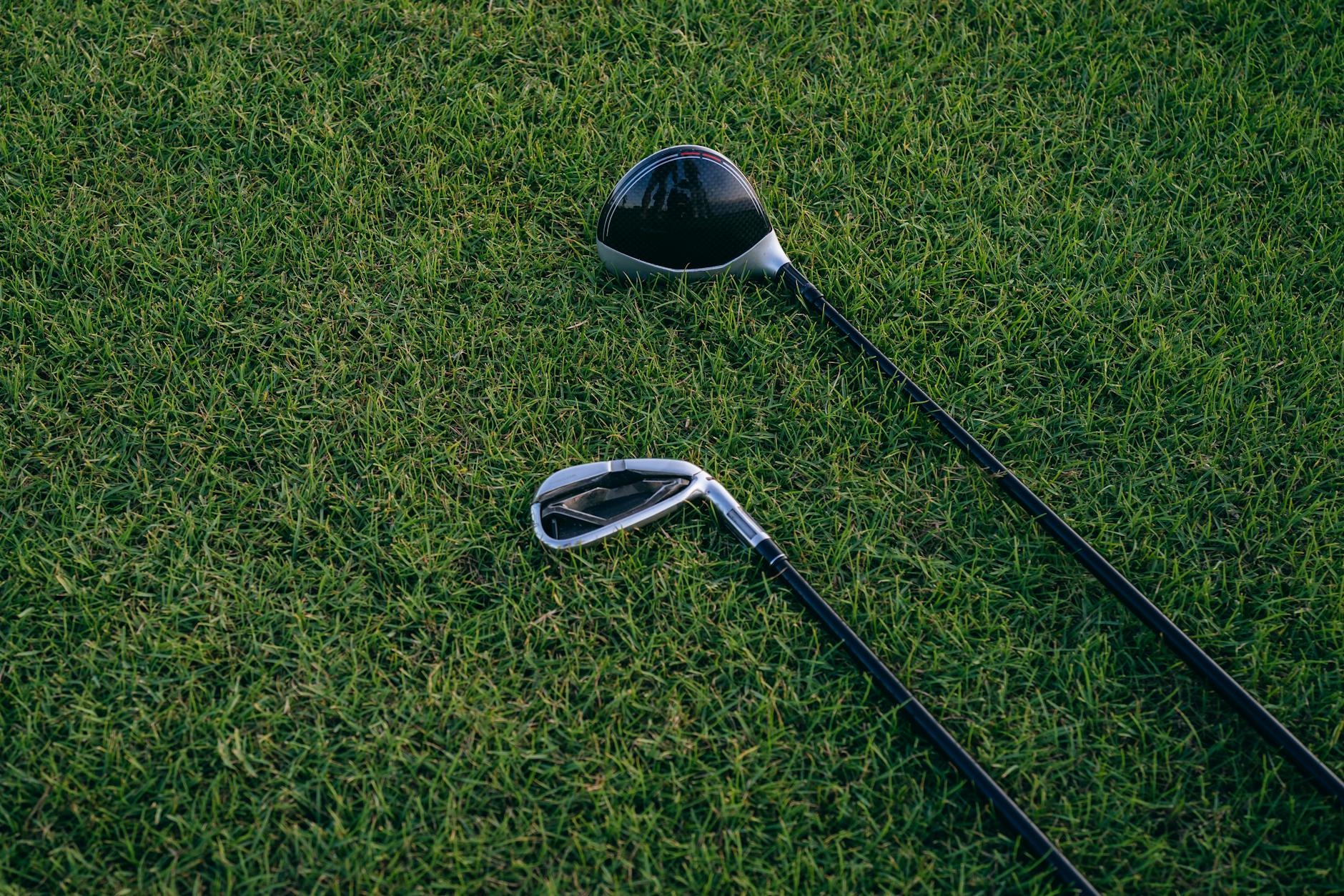
Iron design has followed a similar trajectory. Players' irons have incorporated forgiveness elements from game-improvement designs without sacrificing workability. Tungsten weighting, hollow-body constructions, and AI-optimized face topographies deliver tighter dispersion without the chunky aesthetics that serious players historically rejected.
The Putter Renaissance
Putter technology has experienced its own revolution, with high-MOI mallet designs finally achieving the visual aesthetics that blade loyalists demand. Insert materials have diversified beyond traditional elastomers to include milled aluminum, grooved faces, and composite constructions that each deliver distinct feedback and roll characteristics.
Perhaps more significantly, custom putter fitting has become standard practice among committed players. Length, lie, loft, and face progression are now dialed in with the same precision previously reserved for full-swing clubs.
Practical Implications for Equipment Decisions
For players evaluating equipment changes in 2026, several principles emerge from these technological developments. First, the gap between properly fitted equipment and stock configurations has widened—the potential gains from optimization have increased as technology has advanced.
Second, ball selection deserves more attention than many players give it. The performance differences between premium ball constructions, particularly high-density options designed for stability, exceed the differences between most driver heads at similar price points.
Finally, shaft fitting should be approached as a precision exercise, not a general categorization. With modern manufacturing tolerances, there's no reason to settle for 'close enough' when exact specifications are achievable.
The equipment revolution of 2026 rewards players who approach their bag as an integrated system rather than a collection of individual clubs. Those who invest in proper fitting and select equipment matched to their games will find genuine performance advantages—not through equipment that plays the game for them, but through equipment that gets out of the way and lets them execute.
Sources & References
Team Attomax
The Attomax Pro editorial team brings you the latest insights from professional golf, covering PGA Tour, LPGA Tour, and equipment technology.