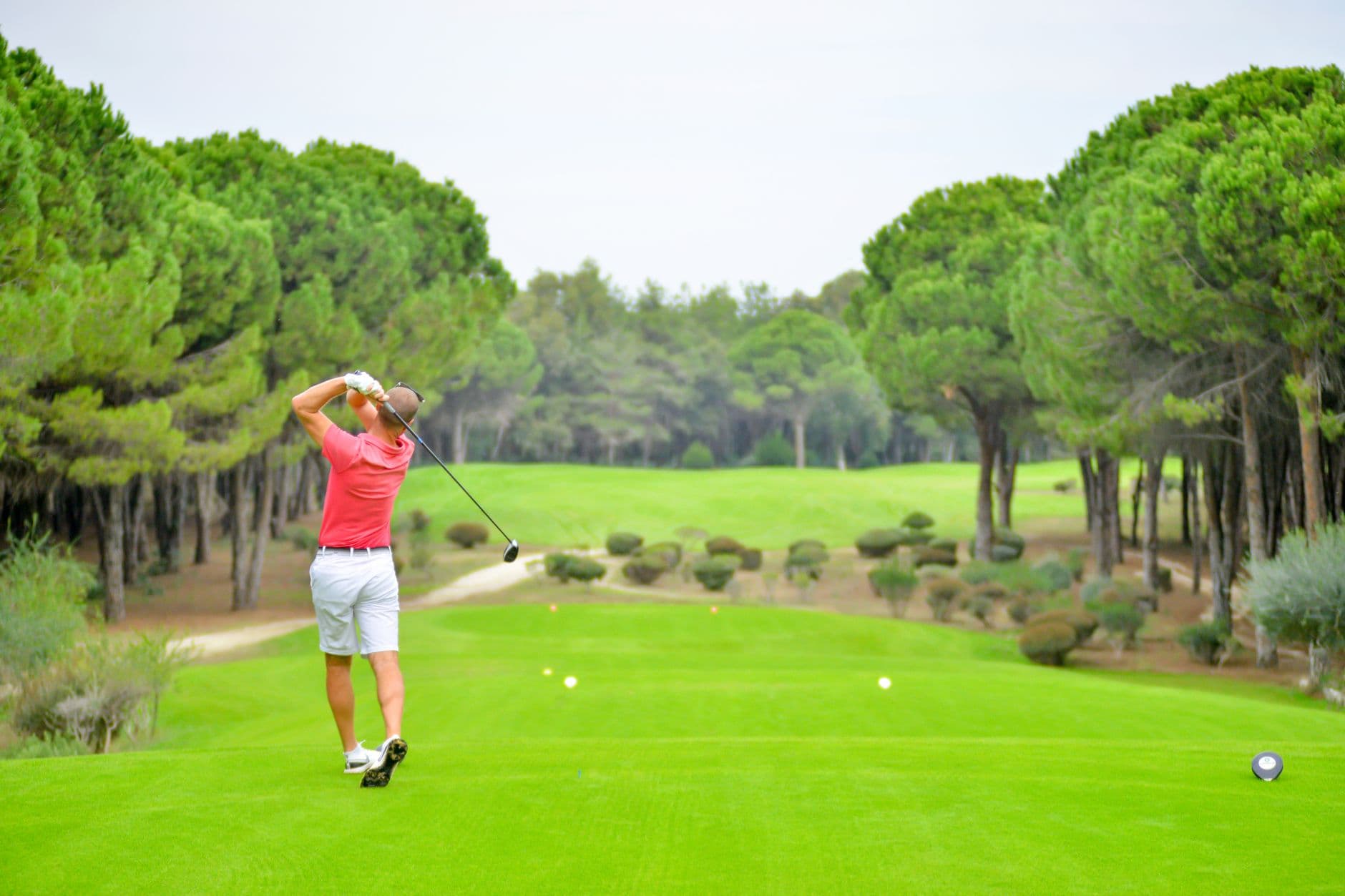
Of all the holes in professional golf, none carries the psychological weight of the 17th at St Andrews — the Road Hole. Stretching along the ancient cobblestones of the Old Course, this par-4 has been the stage for some of the most dramatic moments in the sport's history, a relentless examination of nerve, precision, and course management that has humbled the very best players in the world.
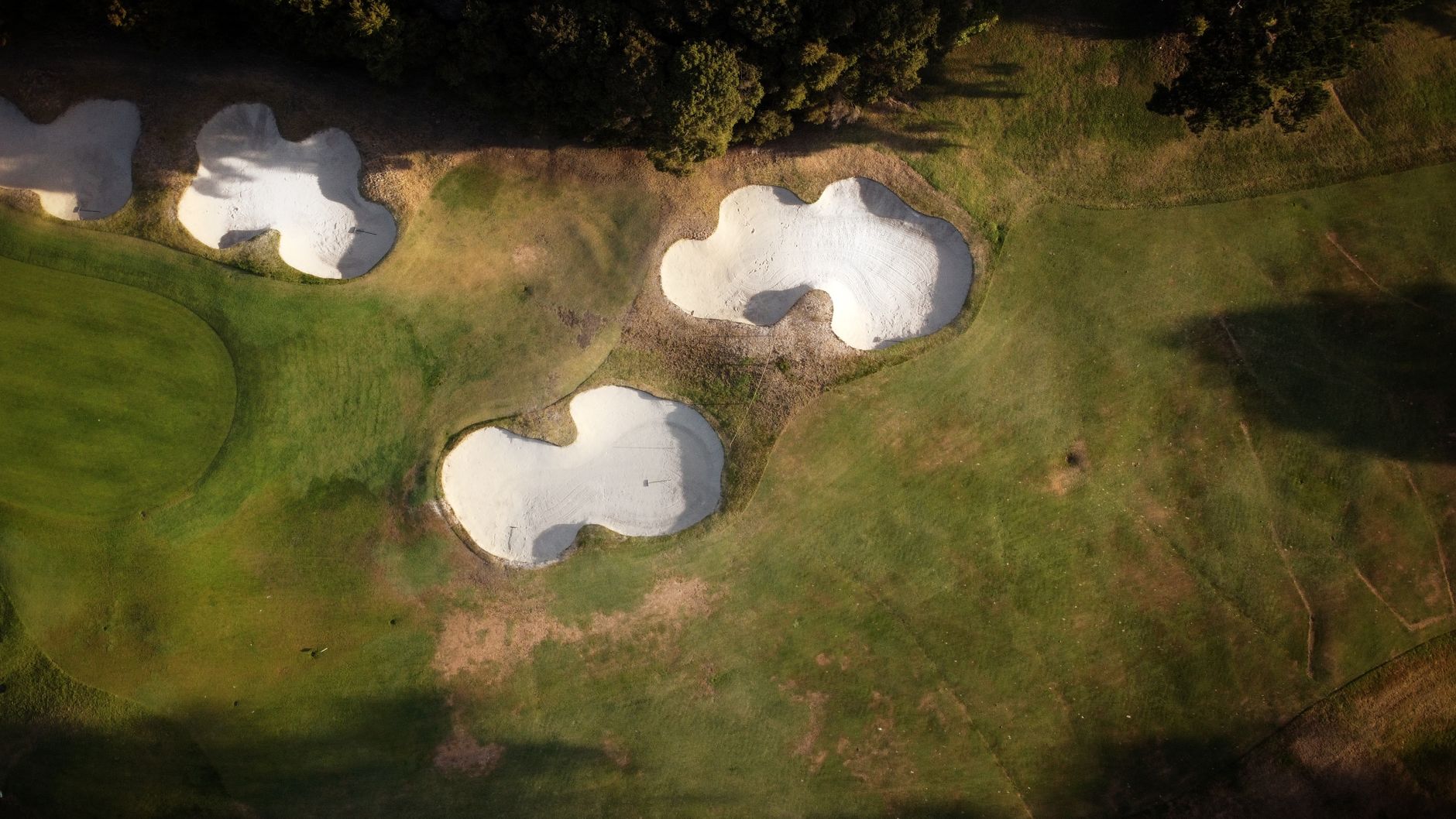
What makes the Road Hole so extraordinary is not just its difficulty — it is its architecture of consequence. Every decision, from the tee shot over the replica hotel sign to the approach into a green guarded by one of the most notorious bunkers in golf, carries the potential for catastrophe. The hole does not merely punish poor shots; it punishes timid ones too.
The Road Hole is a living artifact. Unlike many celebrated holes on the modern tour, it has not been engineered to challenge today's bombers with pure yardage. Its defenses are subtler, rooted in design philosophy that predates the industrial golf complex by centuries. Understanding it demands strategic thinking that goes well beyond hitting a number.
The Architecture of Danger
The tee shot at the 17th demands a blind carry over the corner of the Old Course Hotel — or rather, the black wooden boards that replicate its historic railway sheds. The optimal line cuts as close to that corner as possible, threading between out-of-bounds on the right and the rough on the left. Play it too conservatively and you leave an approach angle that makes reaching the green in regulation nearly impossible.
The green itself is a narrow, angled shelf that runs roughly parallel to the road that gives the hole its name. The Road Hole Bunker — a deep, steep-faced pot bunker on the left front of the green — is positioned exactly where the cautious approach wants to land. It is a masterclass in strategic deception: the safe line feeds directly into danger.
- The Road Hole Bunker requires a near-vertical exit swing; many players take multiple shots to escape
- The road itself is in play — a ball running through the green can come to rest against the stone wall
- The approach must account for the prevailing southwest wind, which typically pushes shots toward the bunker
- The green's depth is deceptive; back pin positions demand pinpoint control of carry distance
- A two-putt from the back of the green — with the road behind — is considered a genuine achievement
Moments That Defined Championships
The Road Hole has a long and brutal record of altering The Open Championship. Tom Watson's extraordinary links mastery across multiple Opens at St Andrews always centered on his management of the 17th. David Ayton famously took five shots from the Road Hole Bunker during a late 19th-century Open, a collapse that passed the championship to another player entirely.
In the 1984 Open, Tom Watson came to the 17th needing a par to retain his position, only to see his approach finish against the wall. The road does not care about reputations. In 1990, Nick Faldo navigated the hole with the clinical precision that defined his major-championship career, demonstrating that the Road Hole rewards methodical thinking over aggression.
The Road Hole is the most difficult hole in the world. It is a par-4½ — you can make three, four, five, six, or more, but par is a great achievement.
— Traditional St Andrews wisdom, echoed across generations of professionals
Perhaps the most indelible image belongs to Tommy Nakajima at the 1978 Open, whose ball found the Road Hole Bunker during the third round. What followed — a series of failed escape attempts and a score that ended his championship — lodged the bunker in the collective consciousness of global golf. It has been informally known as the 'Sands of Nakajima' ever since.

Course Management at the Edge
Playing the Road Hole well is an exercise in ego suppression. The elite players who have mastered links golf understand that bogey on the 17th, when the conditions are difficult, can be the score that wins a championship. The ability to accept a five and move on — rather than forcing a recovery attempt from the road that risks a six or seven — separates the tactically intelligent from the recklessly ambitious.
Wind direction is arguably the most important variable. A north or northeast wind changes the hole's character entirely, allowing more aggressive lines off the tee and reducing the leftward drift on the approach. But the prevailing southwest wind that typically characterizes an Open at St Andrews makes the bunker an almost gravitational force. Reading that wind from the tee — not just for power, but for the entire strategic calculation — is where the round is won or lost.
Ball Flight and Spin in Links Conditions
The Road Hole exposes a truth about ball selection that many golfers overlook until they're standing on the tee: trajectory control matters as much as distance. In firm, fast links conditions, a ball that checks up reliably on a narrow, angled green is not a luxury — it is a necessity. Attomax's High-Density range, particularly the Medium and Hard compressions, is designed to maintain consistent spin rates in cold, low-humidity coastal air, where traditional ball constructions can lose feel and flight predictability.
Shaft flex also plays a critical role in controlling trajectory when the wind is gusting off the North Sea. A shaft that loads too softly under pressure can cause the ball to balloon into a crosswind, turning what was a controlled fade into a shot heading directly toward the Road Hole Bunker. An Attomax shaft with tighter torque specifications gives players the ability to flight the ball down under the wind without sacrificing the energy transfer needed to hold the green.
Why the Road Hole Endures
Golf architecture has evolved dramatically over the past century. Modern courses are constructed with surveying precision, CAD modeling, and drainage engineering that would have been unimaginable to the men who shaped the Old Course. And yet, no modern par-4 — regardless of how many millions were spent on its construction — generates the tension of the Road Hole.
Its genius lies in the layering of its dangers: the blind tee shot, the deceptive approach angle, the bunker that swallows the safe line, and the road that punishes the overcorrection. Each element compounds the previous one, so that a slightly suboptimal tee shot cascades into a nearly impossible approach decision. The hole does not rely on length or rough to be difficult. It relies on architecture.
As The Open Championship returns to St Andrews in future cycles — as it inevitably will — the Road Hole will again serve as the ultimate proving ground. Championships have been made and unmade in that narrow corridor between the hotel boards and the stone wall, and there is no reason to believe the 21st century's best players will find it any more forgiving. The Road Hole does not change. It simply waits.
Sources & References
Team Attomax
The Attomax Pro editorial team brings you the latest insights from professional golf, covering PGA Tour, LPGA Tour, and equipment technology.