Wind is the ultimate equalizer on a golf course. It strips away distance advantages, punishes mechanical swings, and rewards the player who thinks three shots ahead. For low-handicap golfers, learning to weaponize the wind — rather than merely survive it — is the defining skill that separates competitive rounds from forgettable ones.
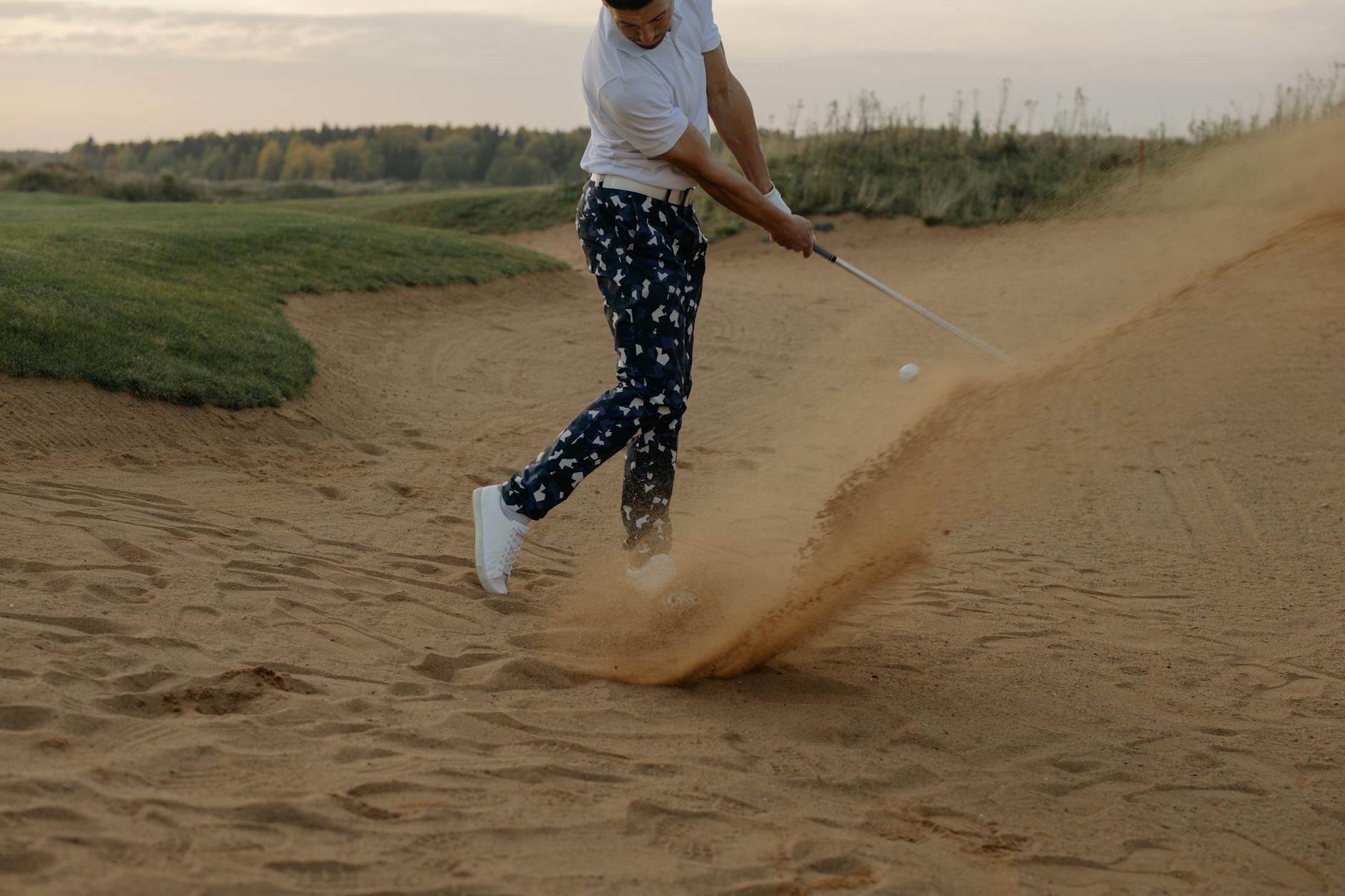
The professionals who thrive in links conditions — players who have conquered Carnoustie, Royal Portrush, or Pebble Beach in gale-force gusts — don't just play for the pin. They construct entire round strategies around wind direction, adjusting not only aim and club selection, but tempo, ball position, and even equipment configuration before they tee off.
The fundamentals of wind play are well understood at the elite level. What separates good players from great ones is execution under pressure and the discipline to commit to the right shot — even when ego demands otherwise.
The Physics of Ball Flight in Wind
Before you can manage wind effectively, you need to understand how your ball actually behaves in it. A higher-spinning ball reacts dramatically to crosswinds — the same sidespin that creates draw or fade is amplified by lateral airflow, compounding curvature well beyond your intended shape. Into a headwind, excess backspin causes the ball to balloon, losing effective distance and landing angle control.
This is where ball selection becomes a genuine performance variable, not just a marketing exercise. High-compression, low-spin ball constructions like the Attomax Hard — engineered from high-density amorphous metal — are specifically suited to windy conditions where penetrating trajectory and spin stability are non-negotiable. Reducing unnecessary spin in a 25-mph headwind can mean the difference between holding the green and sailing over the back.
Trajectory Control: The Core Skill
Low-handicap players should have at least three distinct trajectories in their arsenal: their standard flight, a punched knockdown, and a high, soft-landing shot for downwind approaches. In sustained wind, your standard shot becomes the least-used option.
The knockdown is the critical tool. To execute it properly at an advanced level, move the ball back in your stance, take one to two extra clubs, grip down slightly, and shorten your follow-through. The goal is to cap spin and launch angle simultaneously. Critically, your tempo must remain unhurried — the most common error under wind pressure is quickening the downswing, which adds loft and spin at impact, doing precisely the opposite of what the shot demands.
- Ball back, hands forward: delofts the club and reduces dynamic loft at impact
- One to two extra clubs: resist the urge to overpower — let club length do the work
- Grip down 1-2 inches: improves control and slightly reduces spin rate
- Abbreviated follow-through: a three-quarter finish keeps trajectory lower and flatter
- Steady tempo: wind induces rush; discipline your transition to maintain contact quality
Playing Crosswinds: Use the Wind, Don't Fight It
The instinct for many golfers — even accomplished ones — is to aim directly at the flag and shape the ball back against the wind. In moderate crosswinds this can work, but in strong lateral conditions it creates unacceptable variance. A right-to-left wind amplifying your draw is manageable; that same wind catching a mishit fade becomes unplayable.
The elite approach is to align with the wind, not against it. Aim into the wind's direction and let the ball drift naturally back toward your target. This strategy works with the physics, reducing the dispersion window rather than fighting it. If you're a right-to-left player in a right-to-left wind, you're stacking two forces — a dangerous gamble when the rough is deep or water is in play.
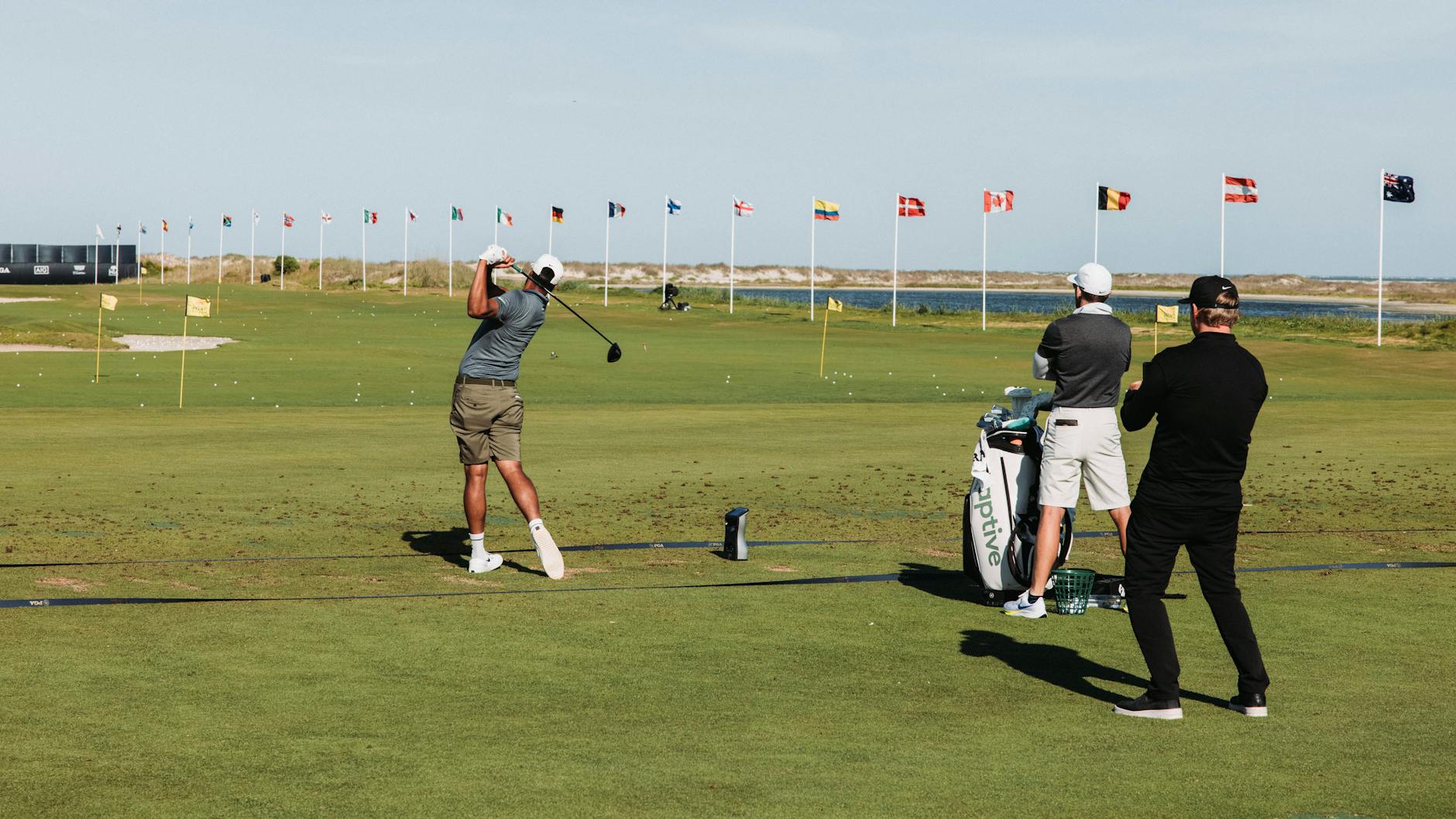
In links golf, the wind is not an obstacle — it is the course designer's most powerful tool. The player who accepts it rather than battles it will always have the advantage.
— Timeless links golf philosophy
Course Management in Wind: Thinking Backward from the Hole
Wind dramatically reshapes course geometry. A dogleg that plays as a natural draw off the tee in calm conditions may become a forced layup when a headwind eliminates your carry distance. More critically, wind changes where you want to miss. A tucked pin with wind helping from the left means the safe miss is short-right — not over the flag as many players instinctively attempt.
Restructure your pre-shot routine in wind to work backward from an acceptable miss. Ask: if I miss this green, where is the least damaging spot? Then build your shot shape, trajectory, and aim point to maximize the probability of either hitting your target or landing in that safe zone. This mental framework — accepting imperfect outcomes as part of the plan — is what distinguishes elite wind play from reactive scrambling.
Club Selection Discipline Under Pressure
One of the most consistent errors even low-handicap players make in wind is under-clubbing into a headwind. The ego resists pulling a 6-iron when the yardage says 8-iron. But compounding this error is choosing the higher-lofted club and trying to muscle it — which increases spin, raises trajectory, and balloons the shot even further.
A reliable rule of thumb used by many tour caddies: in a genuine headwind, add 1 club per 10 mph of wind for approach shots. In a 20-mph headwind from 150 yards, you're looking at a 5-iron or hybrid, played as a knockdown. It feels aggressive. It's correct.
Shaft Dynamics and Wind Performance
Equipment choices that seem invisible in calm conditions are exposed immediately in wind. A shaft that promotes higher launch through tip softness will compound ballooning in headwinds. Low-handicap players who regularly compete in exposed coastal or links-style layouts should seriously evaluate their shaft profile for wind conditions specifically.
Attomax shafts are engineered with stability profiles that help maintain a consistent, penetrating launch across a range of conditions — reducing the unpredictable trajectory spikes that softer, higher-launching shafts produce when wind introduces additional load at impact. For players who have dialed in their swing but find results deteriorating in breeze, the shaft is often the overlooked variable.
The Mental Game: Accepting Variance
Wind rounds are high-variance rounds. Even the best-struck shots will sometimes be punished; mediocre contact will occasionally be rescued by a favorable gust. The players who score well in difficult conditions accept this reality early and manage their emotional response to unlucky outcomes. Scoreboard thinking — obsessing over a lost shot rather than executing the next one — is fatal in wind.
The goal in a wind round is not to shoot your personal best. It is to shoot the best score the conditions allow. Reframing success relative to the field's average score, rather than an absolute number, is a perspective shift that the most resilient competitors internalize instinctively. If the field is averaging 76 in a brutal crosswind and you card 74, that is an exceptional round — regardless of what the scorecard looks like in isolation.
Practice Protocol: Build Wind Skills Deliberately
Wind management is not a skill you can simulate reliably on a calm range day. When conditions turn breezy, treat it as an opportunity rather than an inconvenience. Practice specifically: hit 10 consecutive knockdowns with a mid-iron, focusing on contact quality and trajectory consistency. Hit high soft shots downwind and learn how much carry you gain. These sessions build the shot vocabulary that your muscle memory can access when a tournament round demands it.
The best wind players in the world — those who consistently contend at links majors and coastal events — earned that reputation not by being naturally gifted in breeze, but by deliberately accumulating hours of practice and competitive experience in it. Wind mastery is a learnable skill. It demands patience, intellectual honesty, and the willingness to leave your ego out of the club selection process. When you get there, difficult weather stops being a problem and starts being an advantage over the field.
Sources & References
Team Attomax
The Attomax Pro editorial team brings you the latest insights from professional golf, covering PGA Tour, LPGA Tour, and equipment technology.