Tucked into the suburban landscape of Mamaroneck, New York, Winged Foot Golf Club stands as one of the most revered addresses in American golf. With two A.W. Tillinghast masterworks sharing the same grounds — the West Course and the East Course — the club has long sparked debate among serious players: which layout is the superior test, and which better defines what Winged Foot truly is?
The answer, of course, depends heavily on what you value in golf architecture. But to understand the debate fully, you need to understand the history — and the Majors that have been decided on these fairways.
A.W. Tillinghast and the Art of Penal Design
Albert Warren Tillinghast designed both courses, which opened in 1923. Tillinghast was operating at the absolute peak of American golf architecture during this era, and Winged Foot represented his most ambitious commission to date — two full 18-hole courses on a single, rolling property in Westchester County.
His design philosophy was unapologetically demanding. Tillinghast believed the golf course should challenge the finest players in the world without compromise, and both courses at Winged Foot reflect that creed. Wide fairways punished by deep, gnarly rough. Greens that are comparatively small, severely contoured, and protected by some of the most punishing bunkers in the Northeast. The word that echoes through every serious architectural discussion of Tillinghast's work at Winged Foot is 'penal' — and it is meant as the highest form of praise.
The West Course: America's Examination Hall
The West Course is, by virtually every metric, the more celebrated of the two. It has hosted five U.S. Opens — more than almost any course in the country — and the cumulative body of drama produced on its fairways and greens is staggering. Bobby Jones, Billy Casper, Hale Irwin, Fuzzy Zoeller, and Lee Janzen have all claimed U.S. Open titles here. More recently, Bryson DeChambeau's power-driven, course-defying performance in the 2020 U.S. Open rewrote assumptions about how Winged Foot West could be played.
What makes the West Course so formidable as a Major championship venue is its combination of length, rough severity, and green complexity. The putting surfaces on the West are among the most technically demanding in American golf — deceptively sloped, firm when conditioned for championship play, and surrounded by bunkers that punish anything but precise approach angles. The 18th hole, a par 4 that has ended countless U.S. Open dreams, is widely regarded as one of the great closing holes in championship golf.
- 1929 U.S. Open: Bobby Jones wins in a playoff over Al Espinosa
- 1959 U.S. Open: Billy Casper claims his first Major title
- 1974 U.S. Open: Hale Irwin wins with a score of +7 — the infamous 'Massacre at Winged Foot'
- 1984 U.S. Open: Fuzzy Zoeller and Greg Norman in an iconic playoff
- 2006 U.S. Open: Geoff Ogilvy wins after Phil Mickelson's infamous double-bogey on 18
- 2020 U.S. Open: Bryson DeChambeau dominates with a -6 total despite the course's reputation
Winged Foot is not a course you play. It's a course you survive.
— Traditional Winged Foot lore, often attributed to members and visiting professionals
The East Course: The Underrated Tillinghast Gem
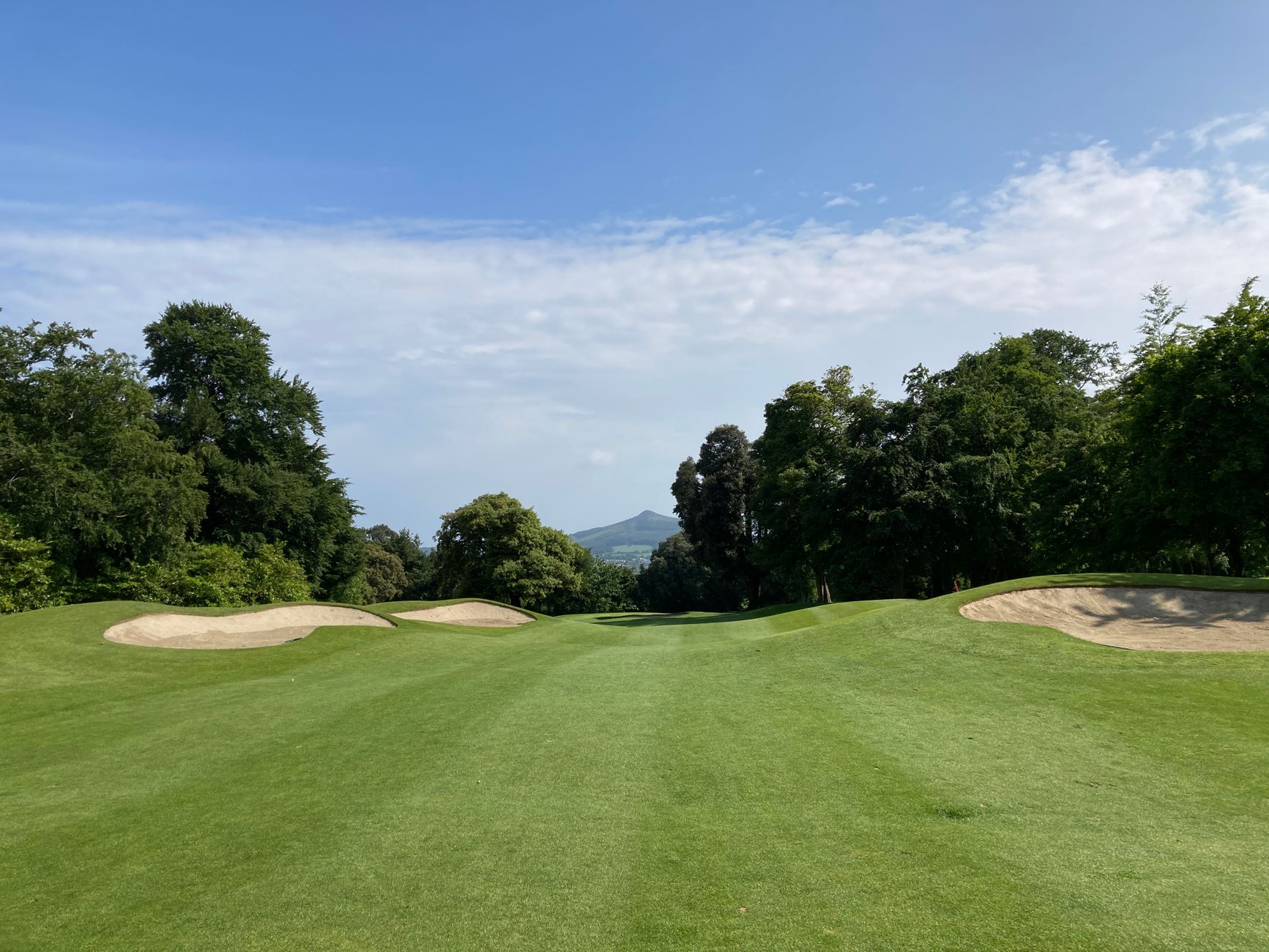
While the West commands the spotlight, the East Course is no lesser achievement. Tillinghast himself reportedly considered the East Course the more elegant of the two designs — a layout that rewards shot-shaping and strategic thinking over raw power. The East features narrower fairway corridors, a more intimate routing that weaves through mature trees, and greens that, while slightly more receptive than the West's, still demand precise approach angles and a fine-tuned understanding of ball flight.
The East has hosted the U.S. Amateur, U.S. Women's Amateur, and other USGA events over the decades, cementing its status as a legitimate championship venue in its own right. For members, the East is often considered the more enjoyable everyday round — a course where creativity off the tee is rewarded, and where course management separates the serious player from the merely talented.
From an architectural standpoint, the East's green complexes are particularly noteworthy. Tillinghast gave each hole a distinct personality, and the East routing arguably shows more variety than the West's relentless brutality. The routing also takes better advantage of the natural elevation changes on the property, producing several visually dramatic tee shots and approach holes that have earned admiration from architectural historians for decades.
East vs. West: The Case for Each
The East vs. West debate ultimately comes down to what you believe golf architecture should accomplish. If you believe a championship course should be an unforgiving examination — a layout where the world's best players must fight for every stroke — then the West Course is your answer. Its track record in Major championship golf is essentially unmatched in the Northeast, and the pressure it exerts on even elite ball-strikers is unique.
If, however, you believe great architecture should challenge and inspire in equal measure — that a course should reward the intelligent player who shapes the ball and manages the scorecard — then the East Course makes a compelling argument. It is Tillinghast in a more nuanced register, and players who appreciate the finer points of golden-age design often find it the more intellectually satisfying round.
- West Course: Major championship pedigree, maximum difficulty, iconic finishing hole, five U.S. Opens
- East Course: Elegant routing, greater variety, strategic reward for shot-shaping, rich amateur championship history
- Both courses: Tillinghast bentgrass greens, deep bunkers, Westchester rough that punishes offline shots
Equipment and Ball Selection: What Winged Foot Demands
Winged Foot — particularly the West — exposes weaknesses in equipment choice with a clarity that few courses can match. The premium on approach spin is enormous: on greens this firm and this contoured, landing the ball precisely and stopping it quickly is not optional. It is the difference between a makeable birdie putt and a 40-footer across a false front.
This is where ball construction matters immensely. The ability to generate high greenside spin while maintaining control off the driver — not simply maximum distance — is the profile that rewards players on both the East and West courses. Attomax's High-Density amorphous metal core technology is engineered precisely for this balance: preserving the long-game energy transfer that modern players demand while delivering the short-game responsiveness that courses like Winged Foot require. On bentgrass greens running at championship speeds, you want a ball that responds to your wedge without sacrificing the trajectory control that navigating Tillinghast's deep bunkers demands.
Winged Foot's Place in the Architecture Pantheon
It is rare for any private club to possess one world-class golf course. Winged Foot has two. That distinction alone places it in a category shared by only a handful of clubs globally — Merion's East and West, Oakmont's primary and practice facilities, or the multi-course compounds of Augusta National's traditions. What Tillinghast achieved in Mamaroneck in 1923 was not simply the design of great golf holes, but the creation of a complete golf environment that continues to shape how we think about championship-caliber course design more than a century later.
Whether you favor the unyielding severity of the West or the nuanced demands of the East, Winged Foot Golf Club remains one of the most important addresses in American golf — and a reminder that the greatest courses are not merely played. They are studied, respected, and ultimately, survived.
Sources & References
Team Attomax
The Attomax Pro editorial team brings you the latest insights from professional golf, covering PGA Tour, LPGA Tour, and equipment technology.