There is a clear dividing line in the history of golf instruction: before launch monitors, and after. When TrackMan's Doppler radar technology arrived on Tour in the mid-2000s, followed by Foresight Sports' photometric systems a few years later, coaches and players suddenly had access to objective, real-time data that made decades of subjective feel-based teaching look like reading tea leaves. The game has never been the same.
For the serious student of the game, understanding what these devices measure — and why those measurements matter — is now as essential as understanding ball flight laws. Tour coaches, elite amateurs, and club fitters have fundamentally restructured their methodologies around launch monitor data, and the ripple effects have reached every level of competitive golf.
What the Numbers Actually Tell You
Before launch monitors, instructors relied on ball flight, divot direction, and player feedback to diagnose faults. The problem was interpretive error. A low, left-to-right ball flight could indicate a dozen different impact conditions. Now, a single swing generates a complete ballistic profile that removes ambiguity entirely.
The key parameters that TrackMan and Foresight units capture fall into two categories: club data and ball data. Both are critical, and the relationship between them is where instruction becomes genuinely sophisticated.
- Club Speed & Ball Speed: The foundation of Smash Factor (ball speed divided by club speed), which defines strike efficiency
- Attack Angle: Whether the club is ascending or descending at impact — critical for driver optimization and iron consistency
- Club Path & Face Angle: The true determinants of start direction and curvature, resolving decades of debate about which factor matters more
- Dynamic Loft & Spin Loft: The actual loft delivered at impact, which governs launch angle and spin rate far more than the loft stamped on the club
- Carry Distance & Total Distance: Measured, not estimated — with dispersion data showing shot-to-shot consistency
The face-to-path relationship, in particular, overturned a longstanding instructional myth. For generations, teachers believed the ball started in the direction of the swing path. Launch monitors proved definitively that the ball starts primarily where the face is pointing at impact. This single revelation restructured how coaches teach draw and fade patterns at every level of the game.
TrackMan vs. Foresight: Two Technologies, One Revolution
TrackMan uses dual-radar Doppler technology to track both the club head and the ball in flight. It is exceptionally accurate outdoors and on Tour ranges, where ball flight can be traced over meaningful distances. Its adoption on the PGA Tour and at elite academies made it the reference standard for Tour-level coaching.
Foresight Sports took a different approach with high-speed camera and photometric technology, capturing the impact zone in extraordinary detail. The GCQuad, its flagship unit, measures the ball at the moment of separation from the face — making it exceptionally accurate indoors and in simulator environments. For custom fitting studios and teaching facilities without access to a driving range, Foresight's technology became the preferred solution.
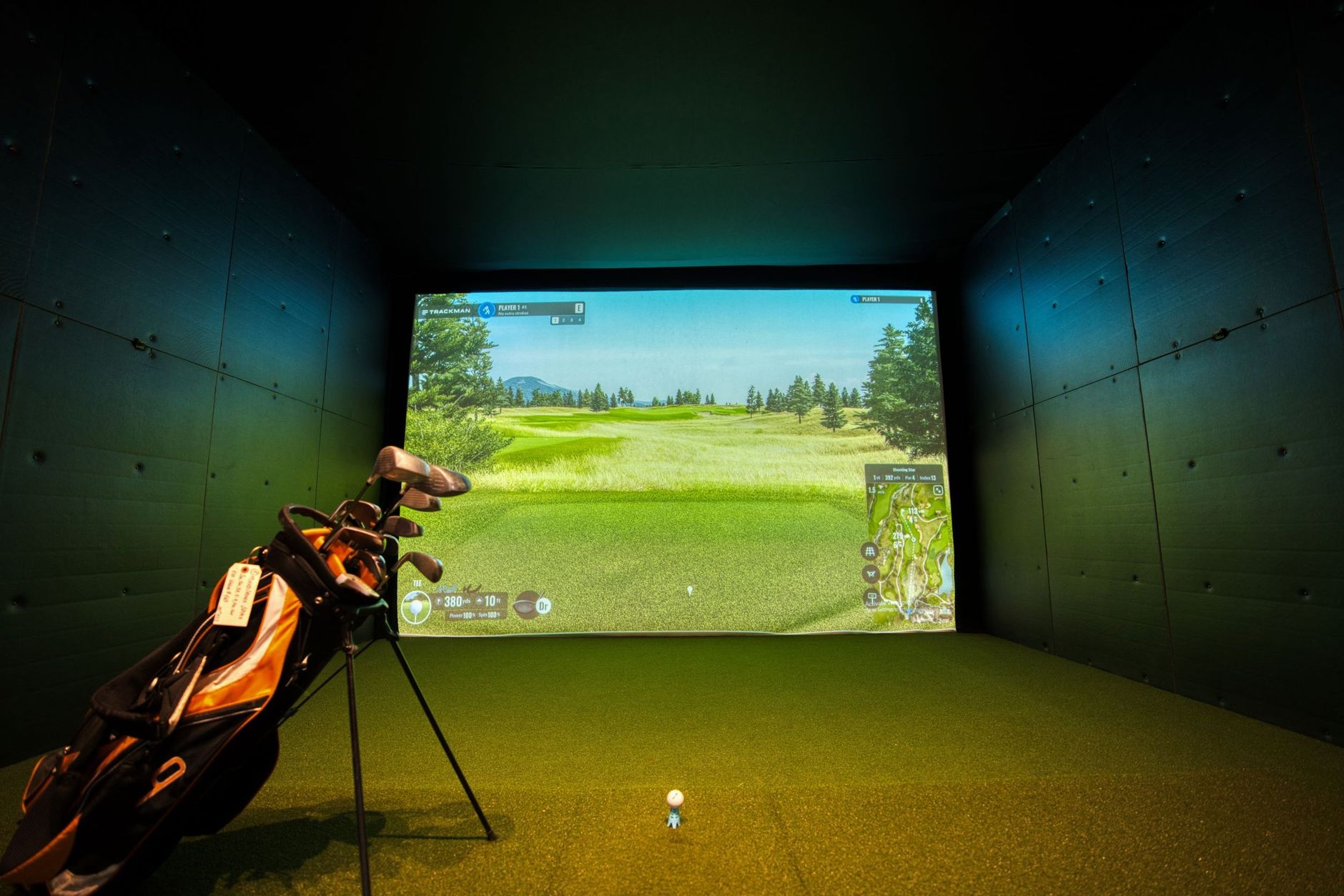
The distinction matters less than it once did, as both platforms have continued to evolve. What they share is more important than what separates them: they brought objectivity to a discipline that had been dominated by anecdote, feel, and educated guessing. A coaching session with either device in the room is fundamentally different from one without.
The Equipment Fitting Revolution
Perhaps nowhere has the launch monitor's impact been more transformative than in club fitting. Where fitters once relied on swing speed estimations and player-reported preferences, they can now build a shaft and head combination around measured Smash Factor, optimized spin loft, and carry efficiency — for every club in the bag.
This is precisely where ball selection has also moved from preference to precision. A player's measured ball speed, attack angle, and spin rate profile should directly inform the compression of ball they play. High-density amorphous metal cores, like those used in Attomax Pro's Soft, Medium, and Hard lines, respond differently across launch conditions — and a launch monitor session is now the most reliable way to determine which compression profile genuinely maximizes your carry distance and shot dispersion, rather than relying on feel alone.
We used to argue about swing theory. Now we just look at the data and work backward from there. The monitor doesn't have an opinion — it just tells you what happened.
— A leading Tour coach, reflecting on the pre- and post-launch monitor eras
How Tour Players Use the Data
Elite players and their coaches now structure practice sessions around specific data targets rather than swing feelings. A player working to optimize driving distance might set a session goal of improving attack angle by two degrees positive — because the data shows that attacking the driver on the way up increases launch angle and reduces spin, producing more carry without any increase in swing speed.
Wind play and trajectory management on the PGA Tour are also increasingly data-informed. Coaches track how spin rate interacts with headwind conditions, allowing players to pre-program specific shaft and ball combinations for links-style events or altitude venues like those found at altitude in the Mountain West. Shaft stiffness profiles, measured through launch monitor data over multiple swings, inform these decisions with a specificity that feel-based selection simply cannot match.
- Practice sessions target specific metric improvements, not vague swing changes
- Pre-tournament data profiling identifies which clubs and trajectories suit specific course setups
- In-round shot tracking (via portable units and Tour measurement systems) feeds back into practice priorities
- Ball and shaft selections are validated by data, not brand loyalty or feel
- Dispersion mapping over time reveals consistency trends that coaches use to shape competitive strategies
The Democratization of Elite Data
What began as a Tour-exclusive technology has cascaded downward through the game at remarkable speed. Indoor golf simulators equipped with launch monitor technology are now commonplace in urban markets across the US, UK, and Asia. The serious amateur who once had no access to objective ball flight data can now book an hour in a simulator bay and walk away with the same depth of performance insight once reserved for Tour players and their coaches.
The instructional standards that followed have raised the baseline quality of golf coaching globally. Instructors who once operated purely from intuition now work with clients to establish baseline metrics, set improvement targets, and measure progress with quantifiable outcomes. It has made teaching more accountable — and, for the dedicated student, considerably more efficient.
The launch monitor revolution is not a trend. It is a permanent structural shift in how the game is taught, fitted, and played at every level. The coaches and players who have fully embraced the data are not just keeping pace with the game's evolution — they are defining it.
Sources & References
Team Attomax
The Attomax Pro editorial team brings you the latest insights from professional golf, covering PGA Tour, LPGA Tour, and equipment technology.