Ask most golfers what makes a shaft "legal" and you'll get a shrug, or a confident but incorrect answer involving a list somewhere on usga.org. The truth is more interesting: unlike golf balls, which must appear on an official Conforming Ball List, or driver heads, which face individual Characteristic Time testing for spring-like effect, shafts are governed by a set of general design requirements under the Equipment Rules jointly maintained by the USGA and The R&A.
That distinction matters enormously for engineers and fitters alike. It means the rulebook is less concerned with what a shaft is made of, and far more concerned with how it behaves — structurally, geometrically, and mechanically — once it's built into a club.
No Shaft-Specific Conforming List — Here's Why
The Equipment Rules treat the shaft as one component of the whole club, not a standalone product requiring pre-approval. Rather than submitting every flex, weight, and torque profile for individual certification, manufacturers are held to a set of structural principles that apply across the board.
This is a deliberate design choice by the governing bodies. Ball flight physics are dominated by the clubhead-ball interaction at impact, so that's where the tightest, most specific testing (COR limits, groove specifications) lives. Shaft performance, by contrast, is expressed through feel, load, and energy transfer — attributes the rules regulate through form, not through a performance ceiling.
What the General Requirements Actually Cover
Strip away the legal language and the core shaft requirements boil down to a handful of structural principles that have remained consistent for decades:
- The shaft must be straight from the top of the grip to the point it enters the clubhead, with no bends, kinks, or hinge points
- It must be attached in a fixed position — no mechanism that allows it to swivel, articulate, or adjust its lie or loft mid-swing
- It must be permanently and securely fixed to the clubhead, without any built-in feature designed to change during the stroke
- Its cross-section must remain fundamentally consistent with a plain, non-mechanical rod, even where the internal layup varies
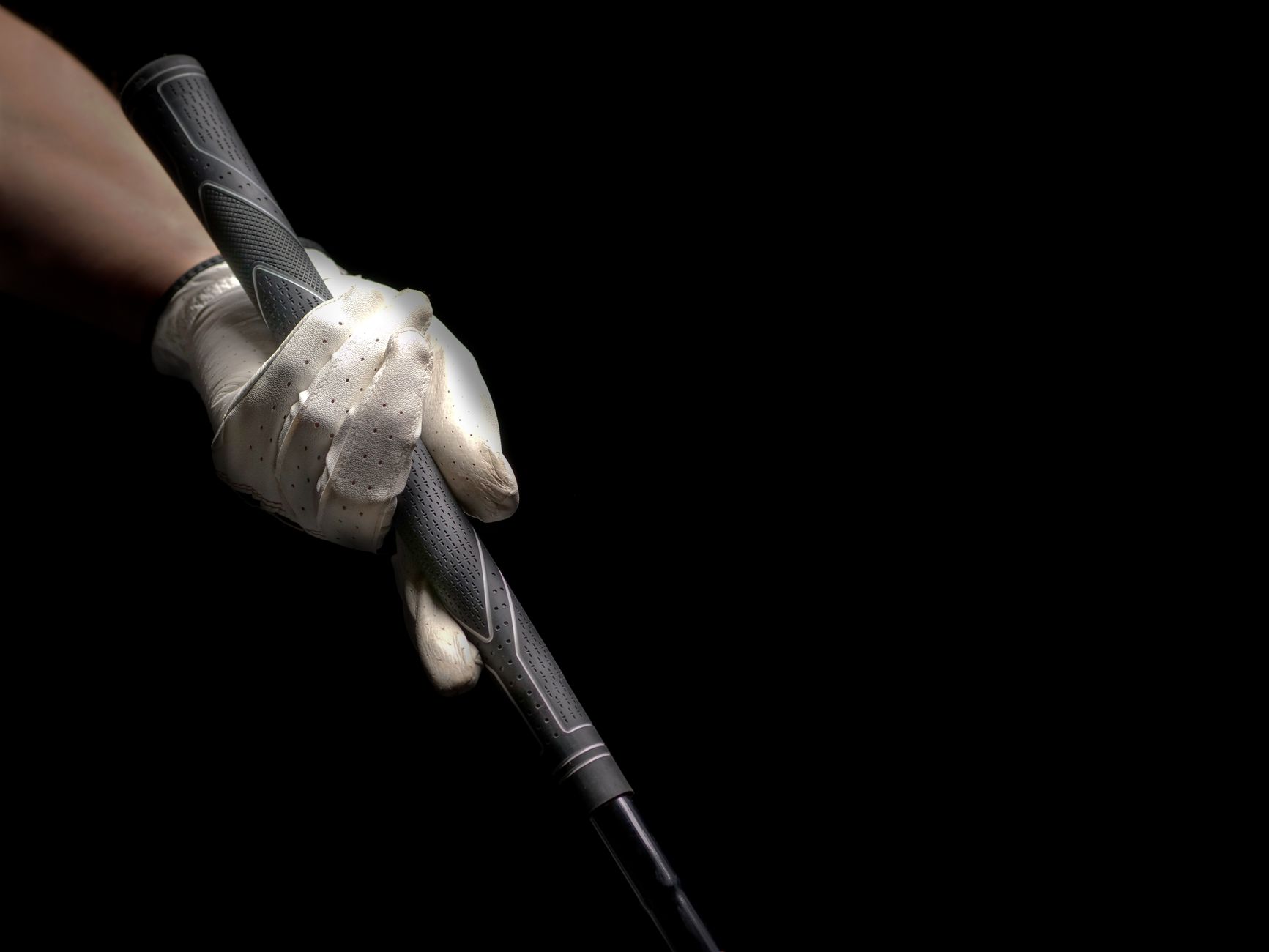
Grips fall under a parallel set of provisions. They must be generally circular in cross-section (with limited allowance for a non-circular putter grip), may taper gradually, and cannot incorporate features that let a player rest fingers in molded positions or otherwise gain an artificial aid to grip. It's a similar philosophy: control the geometry and mechanism, not the material science.
Where the Rulebook Leaves Room to Innovate
Because the Equipment Rules regulate shape and mechanism rather than material or performance ceiling, manufacturers retain wide latitude in what a shaft is actually built from — provided it stays straight, fixed, and free of moving parts. That's the space in which meaningful shaft engineering happens.
This is precisely the territory Attomax Pro operates in. Our ATOM Black and ATOM Blue platforms combine TORAYCA carbon fibre with UHM 65T carbon in the tip and mid sections for controlled load, while an amorphous metal alloy wire — essentially a metallic glass known for exceptional elastic recovery — is woven through key zones to manage energy release through impact. None of this changes the shaft's straightness or fixed attachment; it changes how efficiently stored energy returns to the ball, all while remaining fully within the Equipment Rules. You can see the full engineering breakdown, including how NANOALLOY resin and Ni-Ti shape-memory wire are integrated, on our technology page.
It's worth stressing that conformance is a floor, not a differentiator. Two shafts can both be fully rules-conforming and still behave in dramatically different ways for a given swing — one loading late and releasing quickly, another loading earlier with a softer tip response. The rulebook doesn't rank these outcomes; it simply ensures the mechanism producing them is a straight, fixed, non-adjustable rod rather than something engineered to cheat the geometry.
Why This Matters More at Fitting Than at Purchase
Because conformance is baked into design rather than certified product-by-product, golfers rarely need to think about it directly — every shaft in a reputable manufacturer's shaft range is built to satisfy these requirements from the outset. The real decision golfers face isn't legality, it's suitability: which flex, weight, and torque profile actually matches their transition and tempo.
That's a fitting question, not a rules question, and it's where far more strokes are lost or gained. A mismatch between shaft stiffness and transition load is one of the most common faults we see in club fitting sessions, which is why the free ATOM AI fitting tool is built to analyze tempo and load characteristics before it ever recommends a flex designation like R, SR, S, X, or TX.
Grip conformance deserves the same practical attention. Within the rules' allowance for gradual taper and circular cross-section, there's still meaningful variation in compound hardness and texture that affects hold security in wet conditions — an area covered in depth on our grip range page, and one worth revisiting seasonally as part of routine equipment care.
The Practical Takeaway
There is no shaft on a conforming list to check, because the rulebook was never designed to work that way for this component. What golfers should understand instead is that every legitimate shaft on the market today — regardless of exotic materials or construction methods — has satisfied the same structural principles: straight, fixed, non-mechanical, permanently attached. The performance differences that actually matter to your scorecard live entirely within that framework, which is exactly why fitting, not rules research, should be where your equipment decisions begin.
Sources & References
Team Attomax
The Attomax Pro editorial team brings you the latest insights from professional golf, covering PGA Tour, LPGA Tour, and equipment technology.