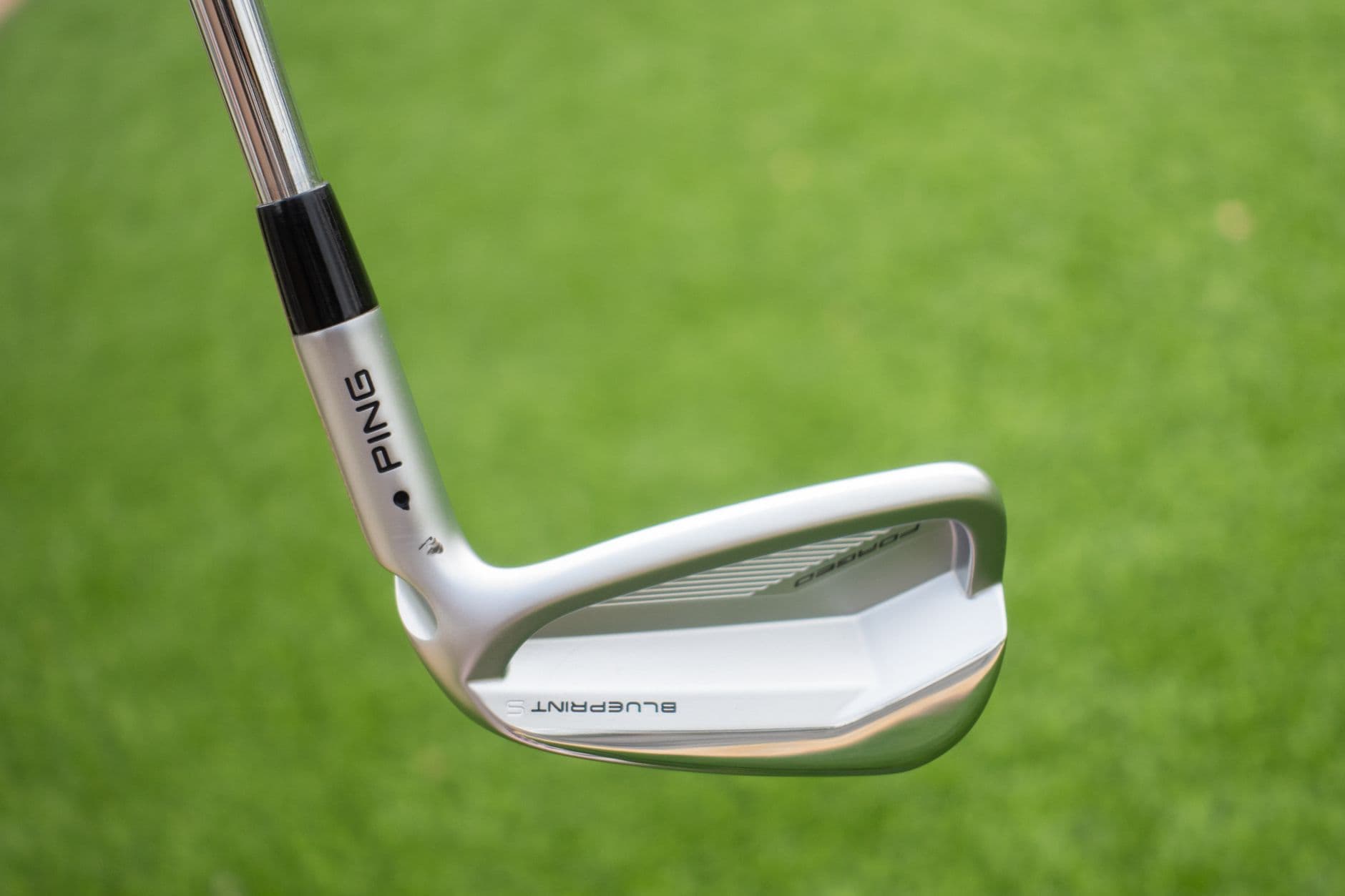
Few topics generate more debate in fitting bays than shaft puring. Proponents insist that aligning a shaft's spine to its neutral bend plane tightens dispersion and improves feel, while skeptics call it an expensive placebo dressed up in engineering language. The truth, as with most equipment science, sits between the extremes.
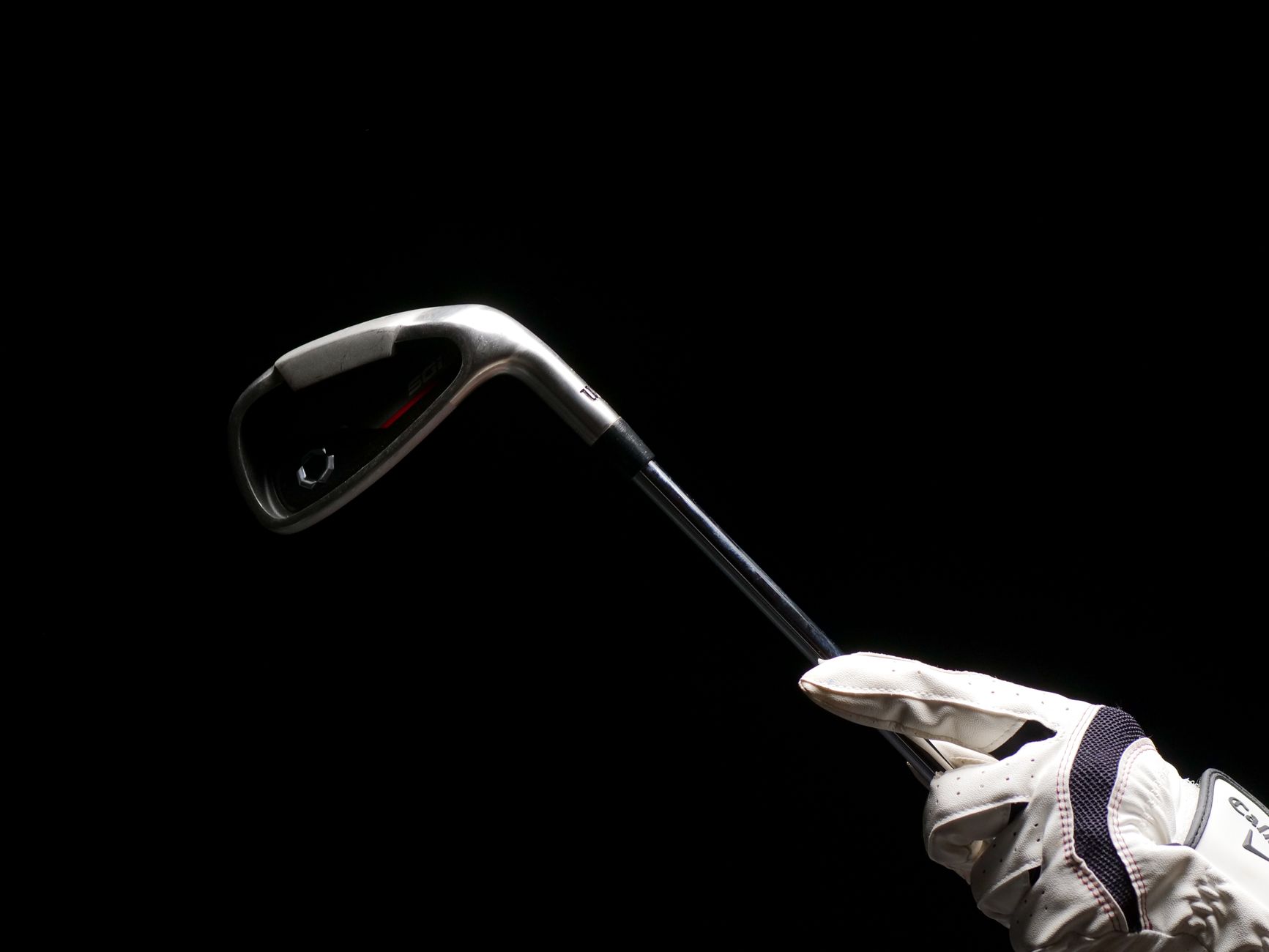
Every shaft, regardless of material, has micro-variations in wall thickness and fiber distribution left over from manufacturing. These variations create a 'spine' — a plane along the shaft's length that bends more stiffly than the surrounding material. Puring is the process of locating that spine and orienting it consistently at address, either aligned with the target line or offset to a repeatable position.
What the Physics Actually Says
In a perfectly uniform shaft, load applied during the downswing would bend and release symmetrically, sending energy straight into the ball. Real shafts are never perfectly uniform because filament winding, resin curing, and even steel-drawing processes introduce tiny asymmetries. A pronounced spine can, in theory, cause the shaft to oscillate off-plane during the transition, subtly influencing face angle at impact.
The key word is subtly. Independent testing over the years — including work published by MyGolfSpy on shaft consistency — has shown that modern production tolerances have narrowed considerably compared to a decade ago. High-quality shafts built with tightly controlled fiber layups, like UHM 65T carbon or TORAYCA-grade composites, exhibit far less spine deviation than older steel or lower-grade graphite designs.
Where Puring Helps — and Where It Doesn't
For players with slower, less repeatable transitions, a strong spine can theoretically introduce more variance shot to shot, because the shaft has more time to oscillate off-axis before impact. Faster, more aggressive transitions tend to load the shaft so quickly and consistently that spine effects are compressed into a narrower window, minimizing their influence.
- Players with slow, smooth tempos may notice more consistent face control after puring, though gains are typically marginal
- Golfers with fast, aggressive transitions often see negligible difference, since load timing dominates over spine orientation
- Puring is most defensible on shafts with looser manufacturing tolerances, less so on premium composites built to tight spec
- Feel differences reported by golfers are frequently real, even when measurable dispersion gains are not
That last point matters more than skeptics often admit. Feel and confidence are legitimate performance variables. If a player believes a pured shaft loads more predictably and that belief produces a smoother tempo, the on-course result can be genuine even if the underlying mechanism is partly psychological.
Amorphous Metal and Tighter Tolerances
This is where materials science becomes relevant to the puring debate. Shafts built with amorphous metal alloy wire — a metallic glass structure with no crystalline grain boundaries — behave differently under load than conventional drawn steel or wound composite. Because the alloy lacks the directional grain structure that creates spine variance in traditional materials, the theoretical benefit of puring is reduced from the outset.
Attomax engineers this principle directly into the ATOM Black and ATOM Blue platforms, pairing amorphous metal wire with NANOALLOY resin systems to minimize the manufacturing asymmetries that puring is designed to correct. It doesn't eliminate the concept entirely, but it does mean the gap between a pured and un-pured unit of the same construction is typically smaller than with older-generation shafts.
Practical Guidance for Fitters and Players
If you're evaluating whether puring is worth the added cost and lead time, context matters more than dogma. A player transitioning between flexes or weights should prioritize getting the fundamentals right first, since flex mismatch produces far larger dispersion swings than spine orientation ever will. That's precisely why the free ATOM AI fitting tool starts by analyzing tempo and load characteristics before any discussion of micro-tuning enters the conversation.
Once flex, weight, and length are dialed in through the ATOM shaft range, puring becomes a reasonable refinement rather than a substitute for proper fitting. It should be treated as the final one percent, not the foundation. Golfers chasing consistency should also remember that grip condition and size play into repeatable release patterns just as much as shaft orientation, which is worth considering alongside anything explored in the grip lineup.
Spine effects are real in a lab setting, but for most amateurs, swing repeatability will move the needle far more than shaft orientation ever could.
— Equipment Testing Consensus, MyGolfSpy
For players curious about how shaft construction actually influences these variables, the materials and engineering overview breaks down how alloy composition and resin systems interact under load. Understanding that foundation makes it easier to evaluate whether a service like puring is addressing a real deficiency in a specific shaft or simply adding cost without meaningful return.
So, real gain or marketing? The honest answer is: both, depending on the shaft and the player. On lower-tolerance shafts and for golfers with slower transitions, puring offers a measurable, if modest, benefit. On premium composites and advanced alloys engineered for uniformity from the start, its value shrinks toward the psychological — which, on the course, still counts for something.
Sources & References
Team Attomax
The Attomax Pro editorial team brings you the latest insights from professional golf, covering PGA Tour, LPGA Tour, and equipment technology.