The debate between hybrids and long irons has never been more nuanced. Modern club manufacturing has closed the performance gap considerably, but the choice between a 3-iron and a 19-degree hybrid still comes down to your ball flight tendencies, the courses you play, and — critically — how each club is fitted to your swing.

Tour players and low-handicap amateurs increasingly revisit this decision each season, especially as shaft technology and head designs continue to evolve. Getting it wrong doesn't just cost you yards — it costs you dispersion, spin control, and scoring opportunities from 190 to 220 yards.
The Core Performance Trade-Off
At its simplest, a hybrid replaces the long iron's narrow sole and small face with a wider, more forgiving head profile. That design moves the center of gravity lower and deeper, launching the ball higher with less effort. For most players, this translates to more consistent carry distances and softer landings on firm greens.
Long irons, by contrast, produce a flatter, more penetrating ball flight with higher spin rates off a clean strike. That's a significant advantage when you're playing into a stiff headwind, trying to hold a firm links fairway, or when you need to work the ball left-to-right under branches. The trade-off is that the margin for error is brutally thin — heel and toe misses with a 2- or 3-iron result in dramatic distance and direction loss.
When the Hybrid Wins
The hybrid earns its spot in the bag in several well-defined scenarios. Tight lies in the rough demand it — the wider sole prevents the leading edge from digging, allowing the club to slide through and generate clean contact. Fairway bunkers at distance, par-5 layups from awkward stances, and long approaches into elevated greens all favor the hybrid's higher, softer trajectory.
Players with slower swing speeds — typically under 95 mph with the driver — also benefit disproportionately from hybrids. The deeper CG acts as a mechanical advantage, doing work that the swing alone cannot produce consistently with a long iron. For these players, the hybrid isn't a concession; it's the correct engineering decision.
- Thick rough at distance: wider sole prevents dig-in
- Elevated greens requiring high apex trajectory
- Fairway bunker escapes over 180 yards
- Players with slower attack angles and swing speeds
- Courses with receptive, soft greens where stopping power matters
When the Long Iron Earns Its Place
Ask any touring professional about their 2- or 3-iron and the conversation inevitably turns to wind play. A well-struck long iron pierces a headwind in a way that a hybrid simply cannot match. The lower spin output and flatter trajectory keep the ball in a predictable window, reducing the lateral variance that a ballooning hybrid flight can produce in crosswinds.
Links-style courses present the definitive case for the long iron. Running the ball up to pins from 200 yards, playing stingers through Scottish wind, or chasing par-5 greens along firm turf — these are shots that demand workability and trajectory control. A hybrid's high launch angle fights against you in those conditions.
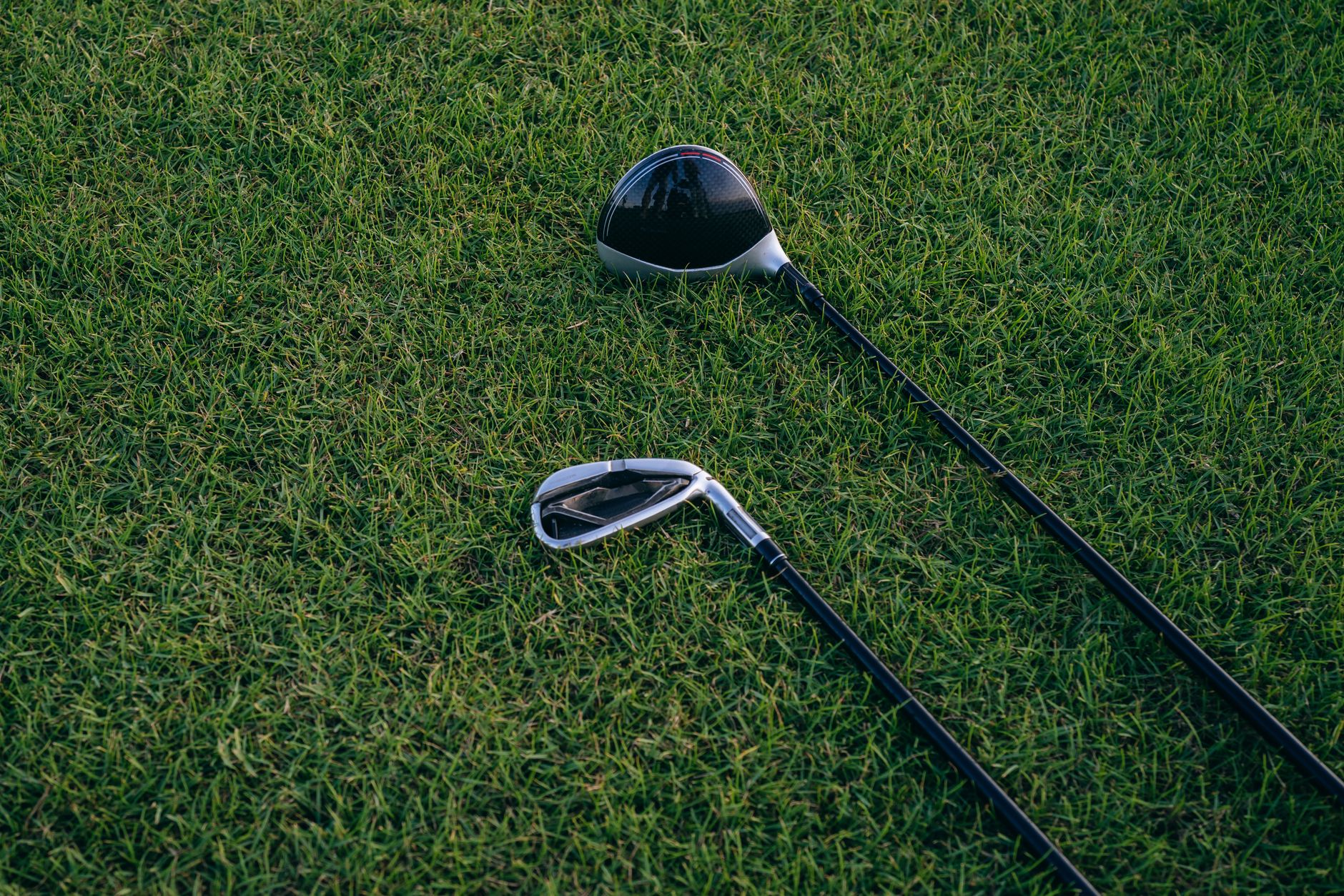
Players with naturally steep attack angles and high swing speeds also generate enough dynamic loft and speed to compress a long iron effectively. For a plus-handicap or scratch golfer consistently delivering 100+ mph club speed with a descending blow, the long iron can be the more precise instrument.
- Into headwinds: penetrating flight resists ballooning
- Links and firm-turf courses requiring ground game options
- Shot-shaping demands: controlled fade or draw
- Players with steep attack angles who can compress the face
- Situations requiring a lower ceiling shot under obstacles
The Fitting Variables That Decide It
The fitting room is where this debate actually gets settled — and it starts with launch monitor data, not aesthetics. The key metrics to compare head-to-head are carry distance, total distance, peak height, landing angle, and lateral dispersion. Carry and peak height tell you about spin and launch angle; landing angle tells you how the ball is going to behave on approach. Dispersion tells you whether the club is actually helping or hurting your misses.
Shaft selection is arguably more consequential than the head itself. A hybrid head paired with the wrong shaft — particularly one that is too soft in tip section — will produce excessive spin and an uncontrollable balloon flight. Conversely, a long iron with a shaft that is too stiff for your transition tempo will produce low, weak strikes and erratic dispersion. This is where a properly matched shaft makes the decisive difference.
The head gets the attention, but the shaft is doing the actual work. Fit the shaft first, then choose the head profile that complements the flight.
— Common principle among certified club fitters
Shaft Flex and Profile for Long Clubs
For hybrids, a mid-kick-point shaft with a smooth tip section generally produces the best results for players seeking consistent launch. High-launcher profiles work well for those who struggle to get the ball airborne, while low-torque, tip-stiff options suit faster swingers who need to manage spin. Attomax's shaft lineup addresses exactly this spectrum — the variable-tip profiles allow fitters to fine-tune launch and spin without changing shaft weight class, which preserves the feel continuity across the set.
For long irons, a firmer tip section is almost always preferred to preserve the penetrating flight characteristics that make the club worth carrying. Excessive tip flex in a long iron creates an unintended high launch that defeats the purpose of choosing the iron in the first place. Weight class also matters: heavier shafts tend to improve consistency in long irons for players who generate fast transitions.
Ball Compression and the Distance Gap
One variable that gets insufficient attention in the hybrid-versus-iron discussion is ball compression. A higher-compression golf ball will amplify the spin and workability advantages of a long iron but punish off-center contact harshly. A softer, higher-COR ball like Attomax's Soft high-density amorphous metal construction can partially offset the forgiveness deficit of a long iron — recovering more energy on slight misses and reducing the spin penalty on slightly thin contact.
If you are committed to carrying a long iron, pair it with a ball that offers energy transfer efficiency on off-center hits. If your game demands the hybrid, a mid-compression option like the Attomax Medium gives you enough spin response to stop the ball on firm greens without ballooning in moderate wind. The ball and club are not independent decisions.
The Practical Decision Framework
The clearest framework: if your dispersion data in a fitting session shows the hybrid delivering tighter lateral spread and comparable or better carry distance, carry the hybrid. If the long iron produces a meaningfully lower peak height with similar or better dispersion — particularly in a fitting conducted in wind tunnel conditions or simulating firm turf — the iron earns the slot.
Many tour-caliber amateurs and professionals resolve this by carrying both — a 2-iron for links events, wind-heavy courses, and stinger scenarios, and a 22-degree hybrid for parkland courses with soft conditions and elevated greens. Bag configuration permitting, the either/or framing is a false constraint. The real discipline is knowing which club to pull from that pair based on the shot in front of you.
Conditions change. Smart players change with them. The bag you take to Carnoustie should not look identical to the bag you take to Augusta.
— Tour caddie perspective
In the end, neither club is universally superior — only contextually appropriate. Get fitted with real launch data, match your shaft to your tempo and attack angle, choose a ball that complements the club's spin profile, and make the decision based on the courses you actually play. That's course management before you even tee it up.
Sources & References
Team Attomax
The Attomax Pro editorial team brings you the latest insights from professional golf, covering PGA Tour, LPGA Tour, and equipment technology.