A round of golf tells you what went wrong. It rarely tells you why. Poor equipment fit hides behind swing faults, course conditions, and simple bad luck, which is why the driving range — not the scorecard — is the better diagnostic tool for identifying a shaft or grip mismatch.
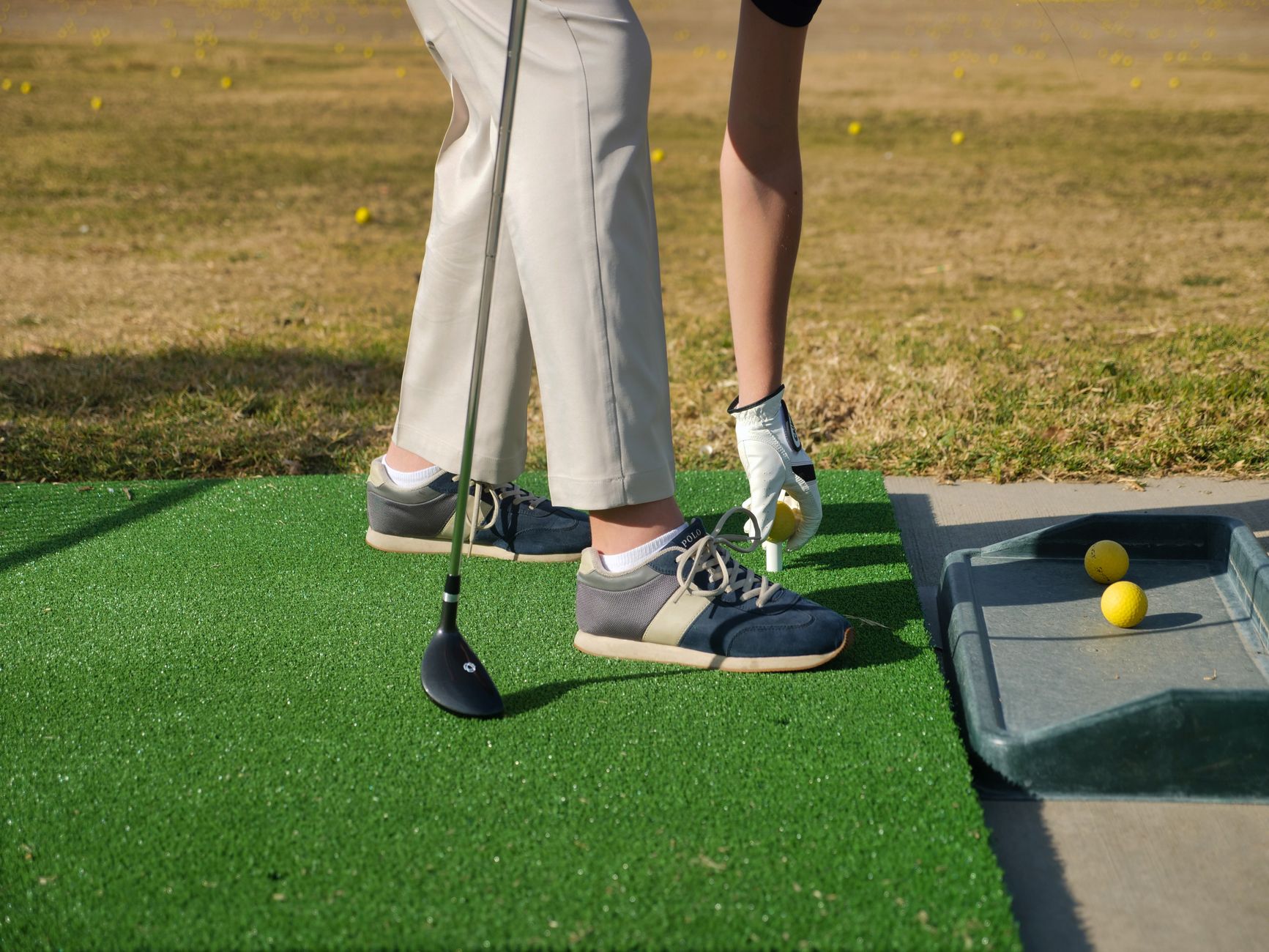
Most recreational players last went through a formal fitting years ago, if ever, and their swing has changed since. Tempo shortens with age, transition speed shifts with fitness, and grip pressure habits evolve without notice. The following practice routines isolate those variables so you can see, in real time, whether your current setup is working with you or against you.
The Dispersion Ladder Drill
Hit ten shots with your current gamer, then ten shots with a shaft one flex softer or stiffer if you have access to a demo. Chart the left-right dispersion pattern rather than the average distance. A shaft that's too stiff for your transition speed typically produces a tight cluster that leaks right for a right-handed player, because the tip can't load and release in sequence with your downswing.
Conversely, a shaft that's too soft often shows the opposite pattern — a wider spread with an occasional hook when timing gets even slightly ahead of the clubhead. If your dispersion looks inconsistent regardless of how clean the strike feels, that's a strong signal the shaft profile doesn't match your delivery, not that your swing needs more work.
Reading the Miss, Not the Result
The instinct is to judge a shot by where it finishes. Better fitting diagnostics judge the miss pattern across a full set of ten to fifteen swings. A single great shot proves nothing; a repeated directional bias under fatigue proves everything.
The Tempo Fade Test
Hit five shots at your normal effort level, then five more after deliberately slowing your transition by roughly twenty percent. If your ball flight tightens and your strike quality improves when you slow down, your current shaft is likely too stiff for your natural tempo, forcing you to rush the transition just to load it properly. This is one of the most common findings in club fitting, and it's exactly the kind of pattern-based data that separates a genuine mismatch from a temporary swing flaw.
- Tightens with slower tempo: shaft may be too stiff for natural transition speed
- Loosens or hooks with slower tempo: shaft may be too soft, over-releasing at low effort
- Consistent regardless of tempo: shaft profile is likely a reasonable match
This test matters because swing speed alone is an incomplete fitting metric. Two golfers with identical clubhead speed can require different flexes entirely based on how aggressively they transition from backswing to downswing, which is precisely why a mismatch here is the single most common fault we see, and it's why the free ATOM AI fitting tool starts with tempo rather than raw speed.

The Grip Pressure Checkpoint
Grips degrade faster than most golfers assume, and a worn or oversized grip forces compensatory pressure that masks itself as an inconsistent release. Take a marker and lightly dot your lead-hand grip pressure points before a session, then check where the marks have smudged after fifteen swings. Excessive smudging in the same spot suggests you're squeezing to compensate for a grip that's too thin, too worn, or simply the wrong compound for current weather conditions.
Humidity and temperature both change how a grip compound performs underhand, which is one reason material choice matters as much as size. Multi-compound options in the grip range are built to maintain tack across a wider humidity band, reducing the unconscious over-gripping that kills clubhead speed and closes the face early.
Why Grip Diameter Skews Everything Else
An undersized grip encourages excess wrist action and a tendency to hook; an oversized grip restricts release and produces a weak fade or block. Before blaming a shaft for a directional miss, confirm the grip diameter matches your glove size and hand size — it's the cheapest variable to fix and the one most often overlooked.
The Flighted Wedge Comparison
Shaft fit isn't only a driver conversation. Hit a series of half-swing wedge shots and watch trajectory height and spin behavior on landing. A shaft with the wrong tip stiffness in your wedges will produce inconsistent launch even on identical swings, because the shorter shaft amplifies any mismatch between your transition speed and the shaft's bend profile through impact.
This is where material engineering becomes genuinely relevant to feel, not just marketing language. Shafts built with UHM 65T carbon layered alongside TORAYCA fibre are engineered for a more predictable tip response through impact, which is easier to evaluate in a controlled half-swing test than in a full-speed drive where timing variables multiply. Understanding how these layups behave is worth a few minutes on the technology page before you assume a poor wedge strike is purely technique.
Amateurs rarely have a swing problem and an equipment problem at the same time — usually it's one masquerading as the other, and the range is where you find out which.
— Club Fitting Industry Perspective
Putting the Data Together
None of these drills require a launch monitor, though one certainly helps confirm what your eyes and hands are already telling you. What they require is honesty about pattern versus outlier, and a willingness to test a variable — flex, grip size, or tip stiffness — one at a time rather than changing everything at once.
If two or more of these routines point toward the same conclusion, that's not a coincidence worth ignoring. A tight dispersion that only appears at reduced tempo, paired with grip smudging in the same spot every session, is a clear signal that your current setup is fighting your natural motion rather than supporting it. Options across R, SR, S, X, and TX flex within the shaft lineup exist precisely because tempo and transition speed vary this much from golfer to golfer, even among players with nearly identical swing speeds.
Equipment fit isn't a one-time decision made at a demo day years ago. It's a moving target that shifts with your body, your tempo, and even the weather. Building these diagnostic checks into a regular practice routine turns vague frustration on the course into specific, actionable data — and that's the difference between guessing at a fix and actually finding one.
Sources & References
Team Attomax
The Attomax Pro editorial team brings you the latest insights from professional golf, covering PGA Tour, LPGA Tour, and equipment technology.