Ask any experienced golfer who has switched shaft brands mid-season and you'll hear the same complaint: two shafts, both stamped 'S' for stiff, somehow play nothing alike. One loads smoothly through transition and releases predictably at impact, while the other feels boardy in the tip and produces a wild low hook. This isn't a fitting error or a bad batch. It's a structural reality of how the golf industry has failed to standardize flex nomenclature.
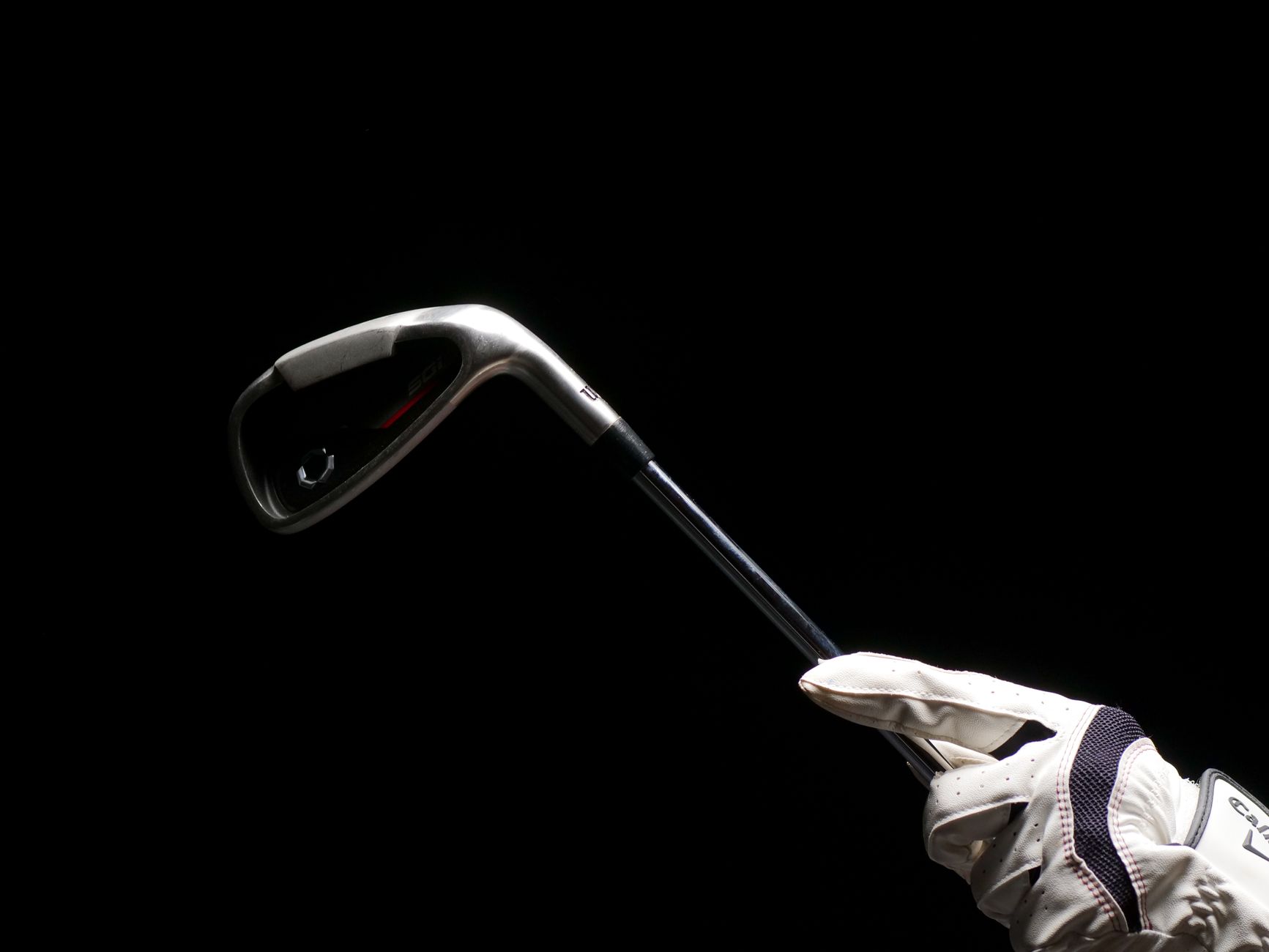
Flex letters like R, S, and X were never governed by a universal engineering standard. Each manufacturer builds its own internal frequency and deflection benchmarks, then applies whichever label fits their marketing conventions. The result is a market where 'stiff' from one brand might measure closer to a competitor's 'regular-stiff' hybrid, or even overlap with another company's X-flex in raw shaft deflection board (SDB) readings.
Frequency Versus Feel: The Missing Variable
The classic method for rating flex is frequency analysis, measuring the oscillations per minute when a shaft is clamped and plucked at the butt end. This gives a legitimate cycles-per-minute (CPM) number, but CPM alone tells you almost nothing about where along the shaft that stiffness is distributed. A shaft can hit an identical CPM reading to a rival while having a dramatically softer tip section and a stiffer butt, or vice versa.
This distribution, known as the bend profile, is what golfers actually feel through the swing. A tip-stiff design resists twisting through impact and tends to produce a lower, more penetrating flight with reduced dispersion for faster transition speeds. A tip-soft design of the same nominal flex will load more aggressively into the ball, adding launch and spin that can either help a slower-tempo player or balloon shots for someone with an aggressive downswing.
- Butt stiffness governs how the shaft feels during the takeaway and early transition
- Mid-section stiffness influences timing and the golfer's sense of 'load'
- Tip stiffness has the largest single effect on launch angle, spin rate, and face rotation at impact
- Torque, measured in degrees of twist, adds another axis entirely, independent of CPM
Material Composition Changes Everything
Beyond profile, the raw materials used in construction drive enormous variance even within a single labeled flex. A shaft built with lower-grade carbon fibre needs more material laid up to reach a given stiffness target, adding weight and dampening feel. Premium constructions using TORAYCA carbon fibre achieve the same bending resistance with less mass, which changes swing weight, kick point, and how energy transfers through the shaft during the release.
This is precisely why the materials story matters as much as the flex letter. At Attomax Pro, our ATOM Black and ATOM Blue shafts are engineered around UHM 65T carbon fibre paired with NANOALLOY resin systems, which allow tighter tolerances on bend profile from piece to piece. Golfers moving between flexes within our own G-designation multi-flex range experience a more predictable, linear step in stiffness precisely because the underlying material and layup process stay consistent, something that isn't guaranteed when comparing 'stiff' across unrelated brands. Full construction details, including how the amorphous metal alloy technology plays into our design philosophy, are outlined on the technology page.
Torque and Tip Stability at Impact
Torque ratings are often overlooked entirely, yet they explain a huge share of the 'same flex, different feel' phenomenon. A low-torque shaft resists twisting around its own axis during the downswing, keeping the clubface more stable through impact for players who generate high shaft-lean and late release. A higher-torque shaft of identical CPM will feel noticeably more lively and can add a touch of draw bias for golfers who need help squaring the face.
This is one reason two 'S-flex' shafts from different manufacturers can send the same swing 15 yards left of target with one and dead straight with the other. The flex letter said nothing about torque, bend profile, or tip section behavior, all of which matter more than the single alphanumeric label suggests.
Flex is a label, not a specification. Two shafts can share a letter and diverge completely in bend profile, torque, and material response under load.
— Shaft Fitting Industry Perspective
Why Data-Driven Fitting Solves the Problem
The practical takeaway is that swing speed alone should never dictate a shaft purchase. Two golfers with identical driver swing speeds can require entirely different tip stiffness and torque profiles based on transition tempo, release timing, and angle of attack. Relying on a flex letter printed on a wall display ignores all of this nuance.
This is exactly the gap our free ATOM AI fitting tool is built to close. Rather than mapping swing speed to a generic flex label, it analyzes tempo and transition data to recommend a specific model and flex from within the ATOM shaft range, accounting for bend profile and torque rather than a marketing convention. Pairing that fitting data with the correct shaft is only half the equation, though; grip diameter and compound also shift how much stiffness a golfer perceives at the top of the swing, which is why our grip lineup is engineered alongside the shafts rather than as an afterthought.
For golfers who have been chasing consistency by shaft-swapping within a single flex category, the fix usually isn't more trial and error on a launch monitor with mismatched brands. It's understanding that 'stiff' is a starting conversation, not a specification, and treating the fitting process with the same rigor applied to loft and lie angle. Equipment performs best when material science, bend profile, and player tempo are matched deliberately rather than assumed from a letter stamped near the grip.
Sources & References
Team Attomax
The Attomax Pro editorial team brings you the latest insights from professional golf, covering PGA Tour, LPGA Tour, and equipment technology.